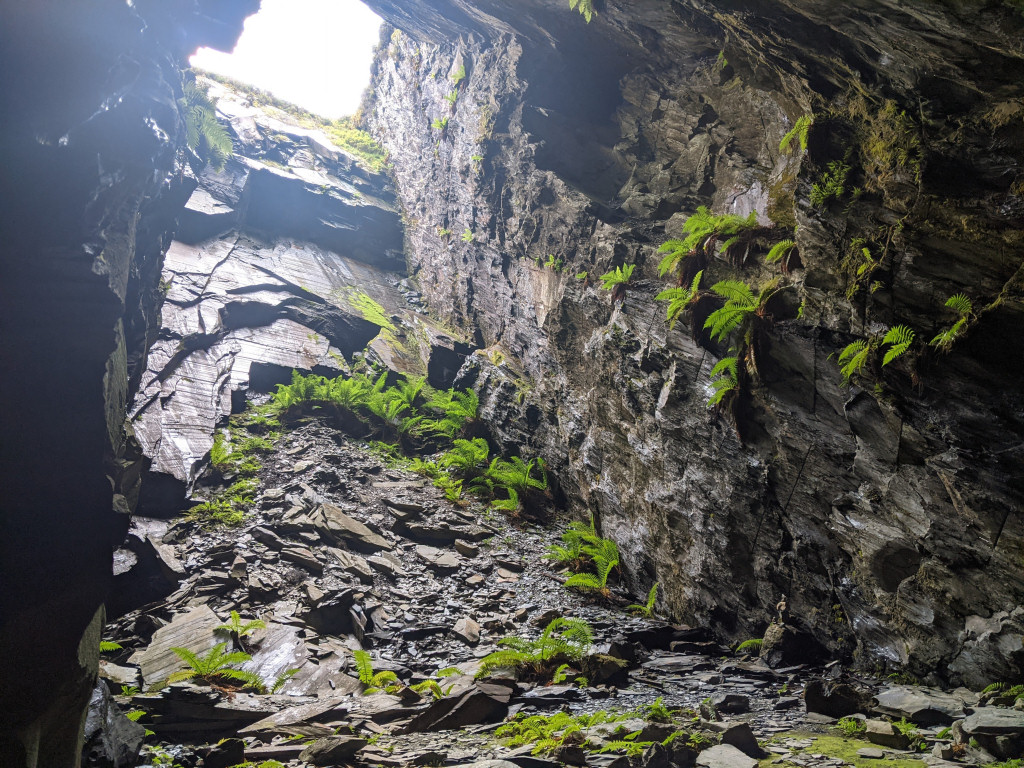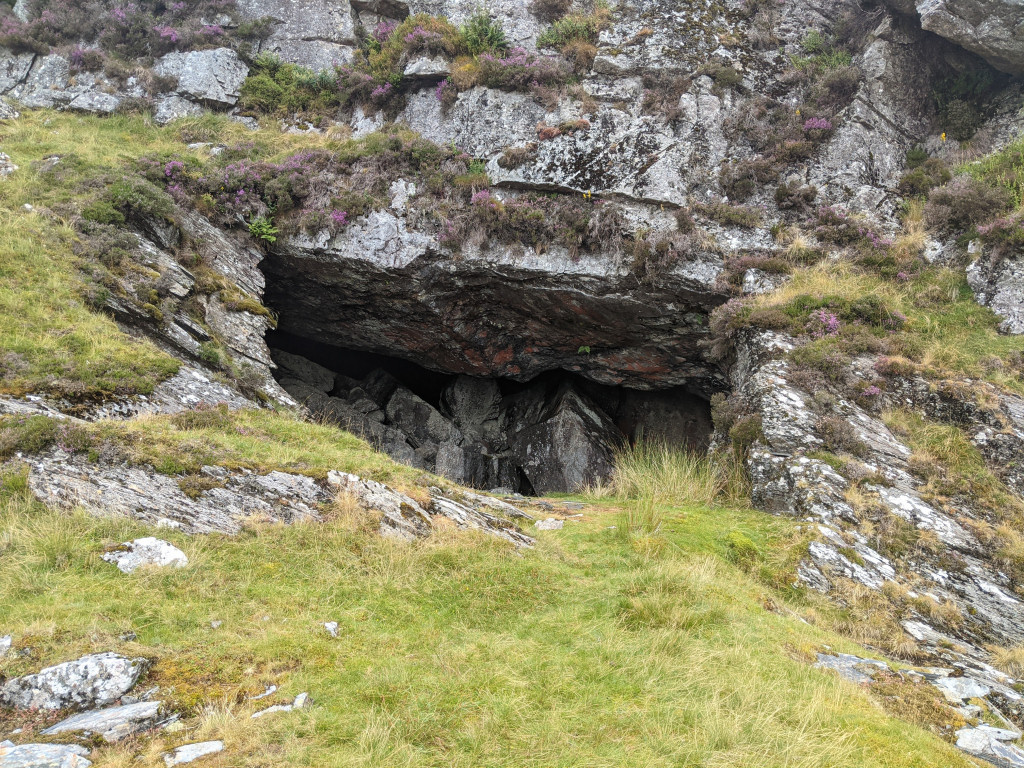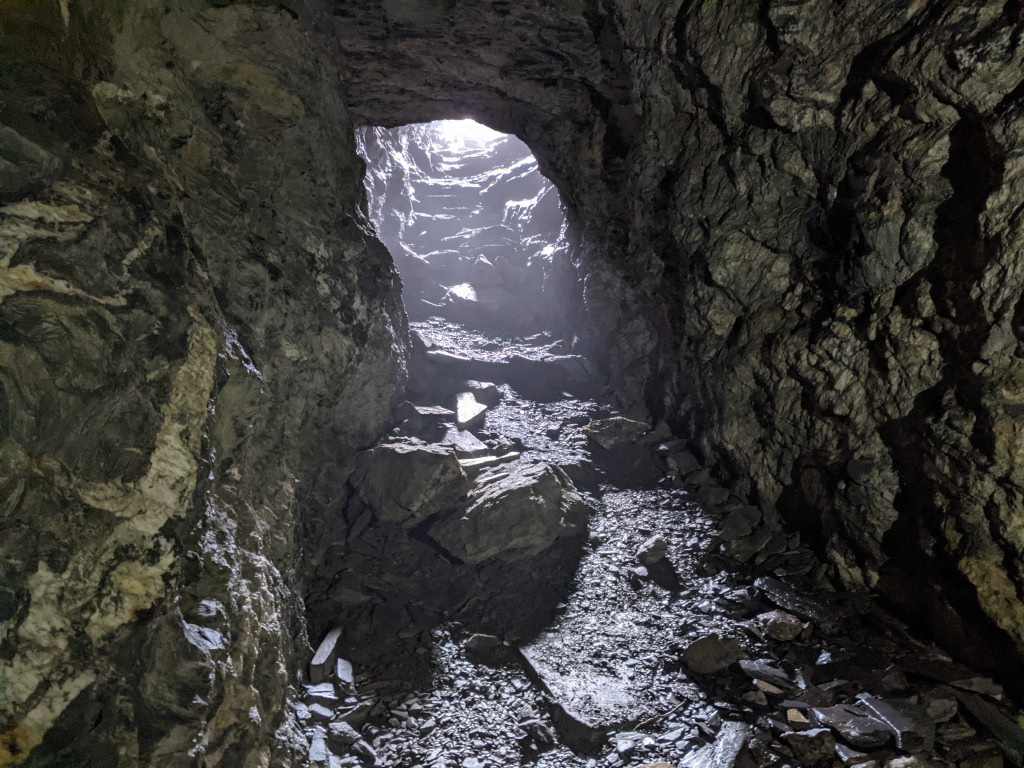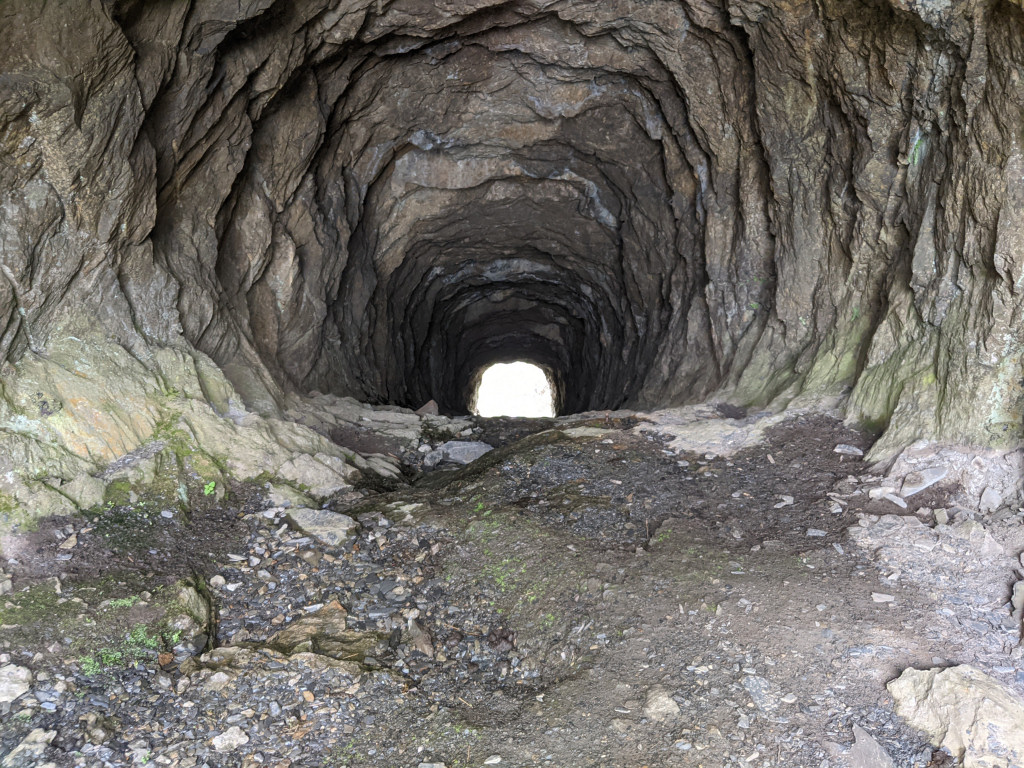



Underground workings with remains. Workings entered through five adits, but are unstable. Served by spectacular incline through a tunnel.***
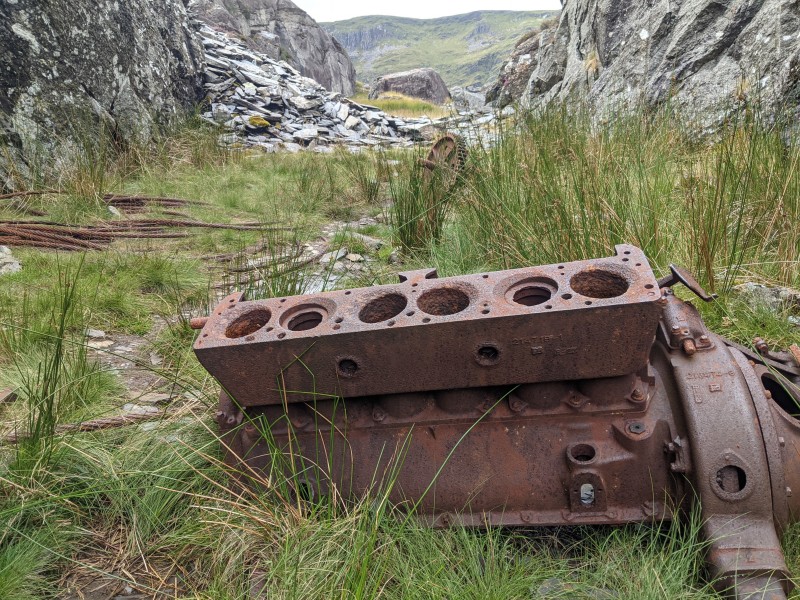
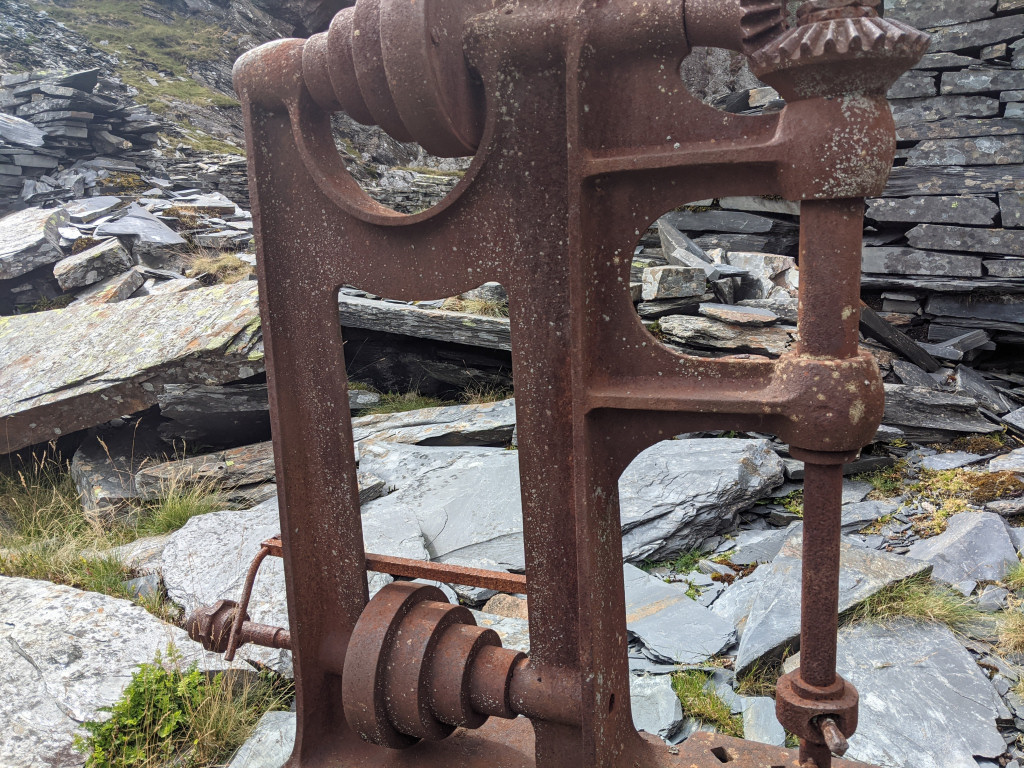
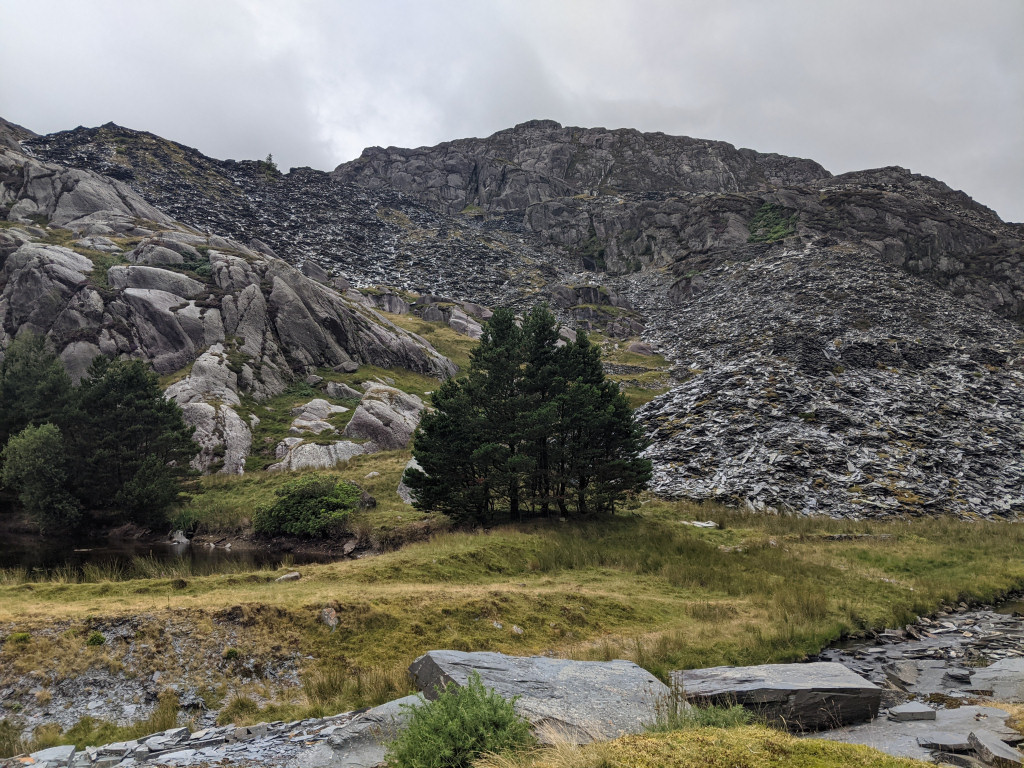
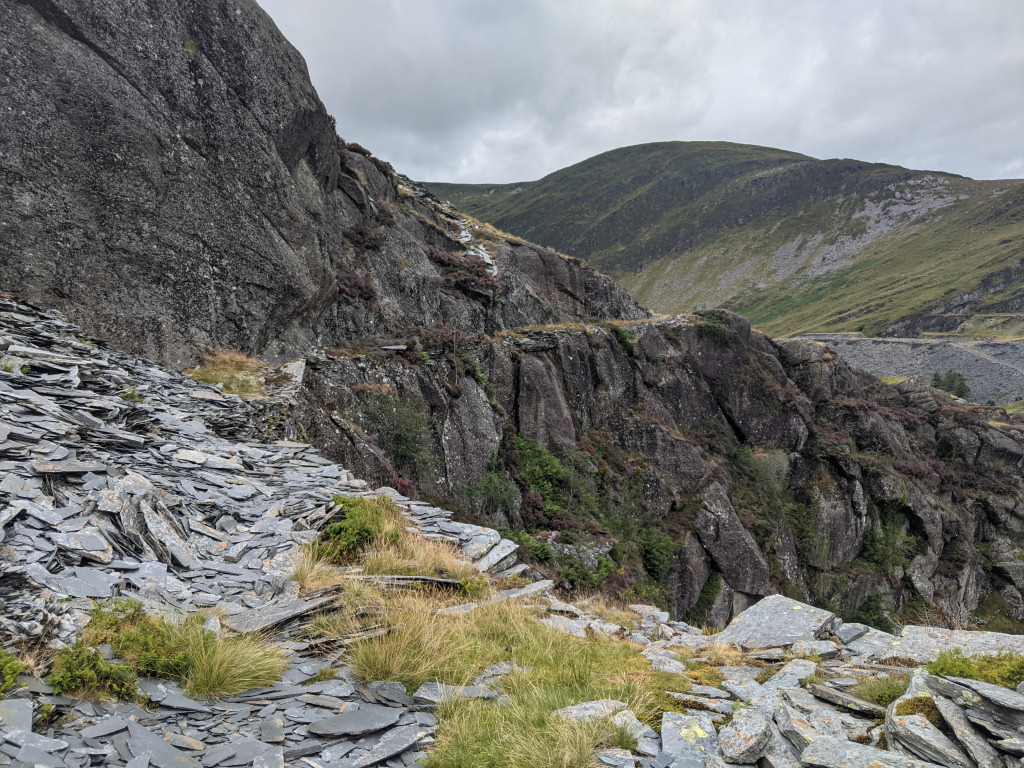
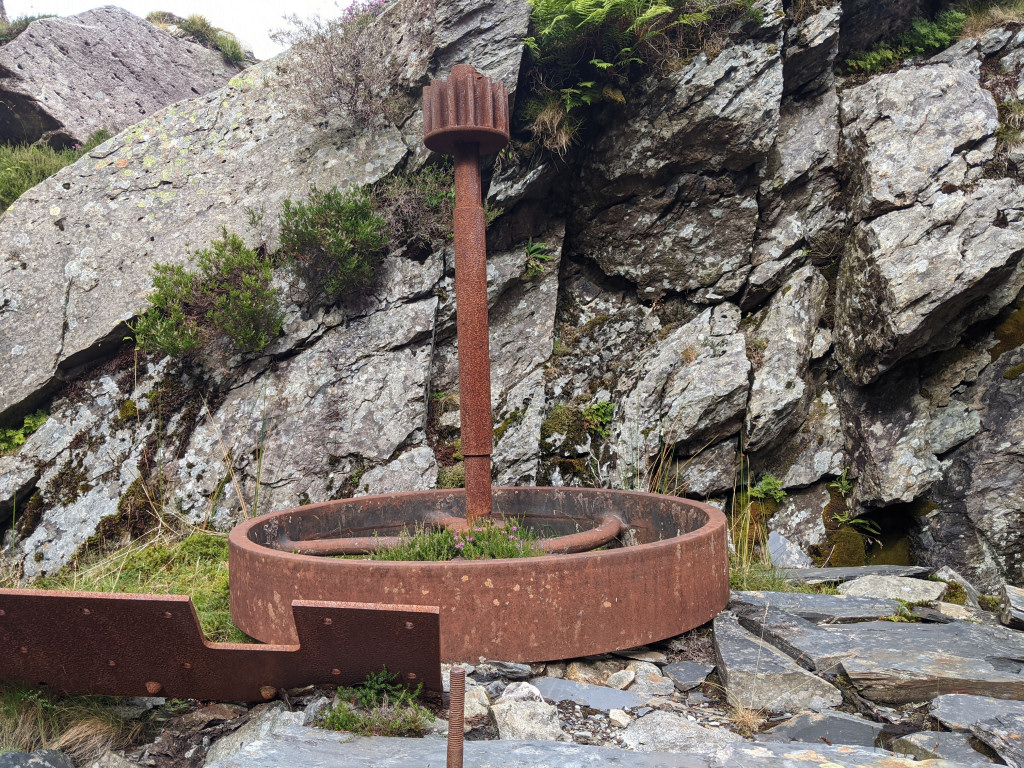
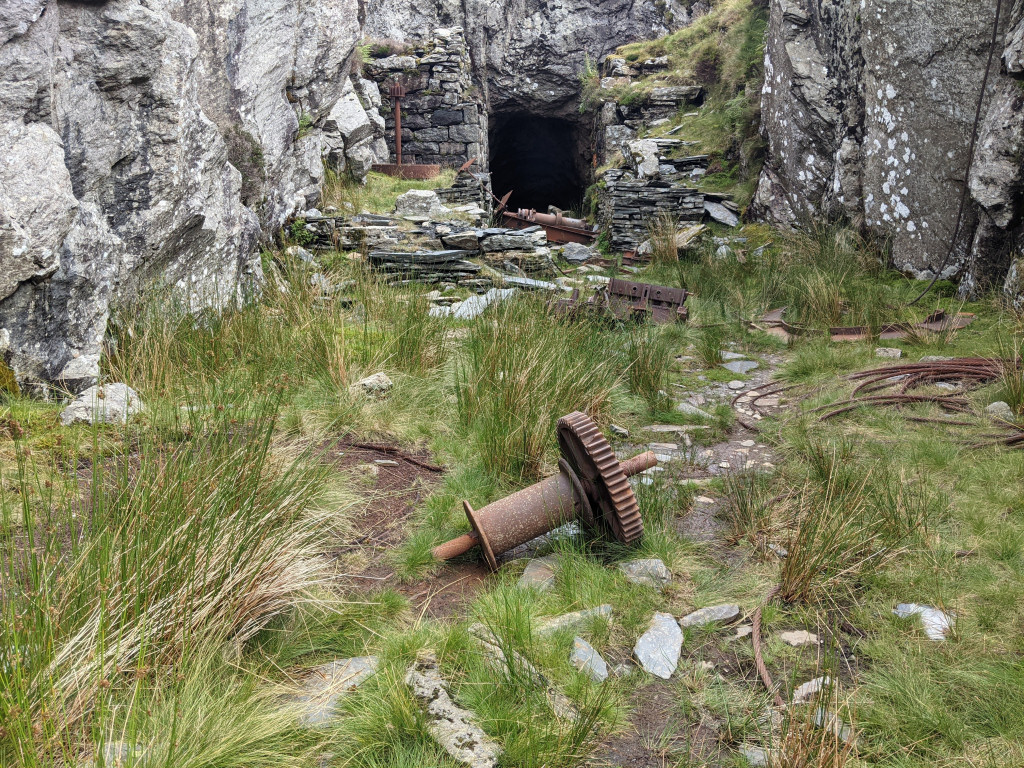
Most prominent surviving feature at Wrysgan is the large incline, which remains largely intact along with its access cutting, tunnel, and upper formation. The lower end was destroyed by road construction in the 1950s. Although the old drum house has collapsed, much of its drum gear is still present, alongside remnants of the steam haulage engine and an abandoned lorry chassis intended as a final power source. On the Cwmorthin side, only traces of the original gravity incline survive, but the packhorse track, landing platform (Cei Mulod), and stone steps are well preserved. Ruins of early dressing sheds, the upper mill, and workers’ barracks survive at the highest level (Floor 3), while the main mill at Floor 6 is degraded but retains its under-floor tailrace. Above the site, a stone-embanked reservoir with a double dam is notable. Most of the mine’s adits remain open, though the underground workings have unstable roofs making access unsafe. Additional outlying trial workings exist near the southwest and adjacent to the main incline. Relics of the underground ropeway used in the last phase of small-scale operations also remain visible.
Wrysgan was a small underground slate quarry located on an elevated and hard-to-access site near Blaenau Ffestiniog, opening in the 1830s. It grew to operate across eight levels with a peak output of around 3,000 tons in 1904, employing over 100 workers. Early transportation challenges were addressed by building a balanced incline in 1850, replaced in 1872 by a spectacular incline linking directly to the Ffestiniog Railway 600 feet below. The lower section of this incline required a steam engine to haul empties. Due to limited water supply from the small Llyn y Wrysgan, steam power was extensively used; a steam engine was installed in the lower mill around 1890, and later a 50 hp producer gas engine drove the mills. The underground steam-powered incline was abandoned in favor of an external water balance, which itself was later powered by an old car engine. Electrification in the early 1920s brought a more reliable power source. Workforce numbers declined steadily from over 100 in the early 1900s to just a dozen before the quarry’s closure in the 1950s.
External Links
Publications (8)
- Baines, Dave (1996); Wrysgan Survey; 1 pages
- Barney; Wrysgan Quarry; 4 pages
- Gwyn, David, (2015); Welsh Slate: archaeology and history of an industry; Royal Commission on the Ancient and Historical Monuments of Wales; 9781871184518
- Lindsay, Jean (1974); History of the North Wales Slate Industry; David & Charles; pp.333; ISBN 0-71536-264-X
- Richards, Alun J. (2013); Slate Quarrying in Wales; Gwasg Carreg Gwalch; ISBN 1-84527-026-6
- Richards, Alun John (1991); Gazeteer of the Welsh Slate Industry, A; Gwasg Carreg Gwalch 978-0863811968
- Richards, Alun John, (1999); The Slate Regions of North and Mid Wales and their Railways; Gwasg Carreg Gwalch; 0863816053
- Richards, Alun John, (2002); Fragments of Mine & Mill in Wales; pp.44, 83-84 ; Gwasg Carreg Gwalch; 0863818129