



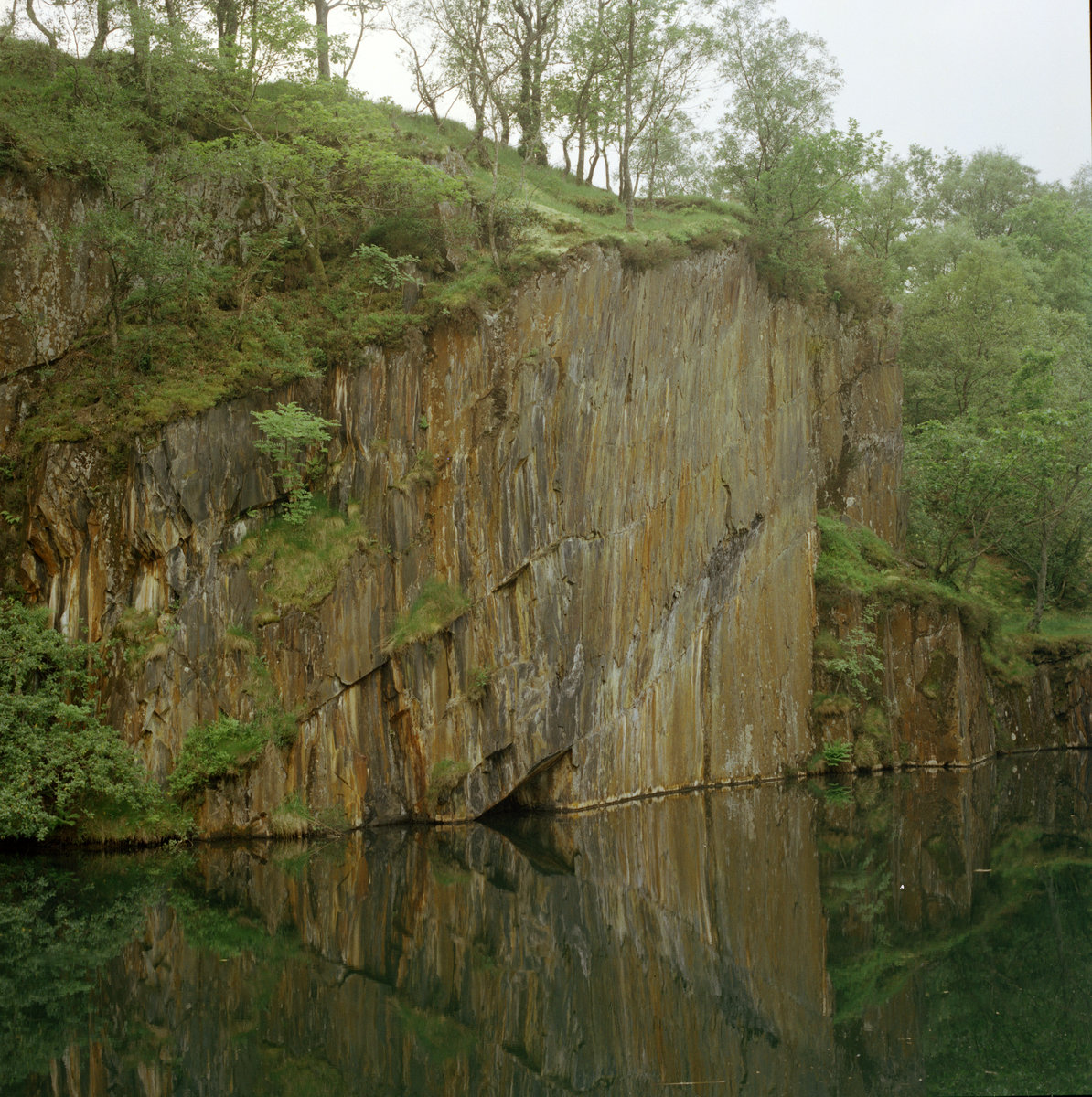
Pit.
Remains of the site include traces of several buildings. Two distinct wheel pits survive, likely representing different phases of power use. Launder pillars and partial remains of a reservoir—dammed in part by natural rock—are evident behind the site. A unique horse whim circle survives, identifiable by its curved screening wall.
Operated from around 1840, producing the same black slate as Coed Mawr. Early haulage used a horse whim for raising waste. Haulage and pumping were later converted to water power, and subsequently to steam. Output exceeded 600 tons in the early years; by 1882, six men produced 120 tons. Transport relied on carting down the valley.
Publications (5)
- Gwyn, David, (2015); Welsh Slate: archaeology and history of an industry; Royal Commission on the Ancient and Historical Monuments of Wales; 9781871184518
- Lindsay, Jean (1974); History of the North Wales Slate Industry; David & Charles; pp.323; ISBN 0-71536-264-X
- Richards, Alun J. (2013); Slate Quarrying in Wales; Gwasg Carreg Gwalch; ISBN 1-84527-026-6
- Richards, Alun John (1991); Gazeteer of the Welsh Slate Industry, A; Gwasg Carreg Gwalch 978-0863811968
- Richards, Alun John, (1999); The Slate Regions of North and Mid Wales and their Railways; Gwasg Carreg Gwalch; 0863815852
