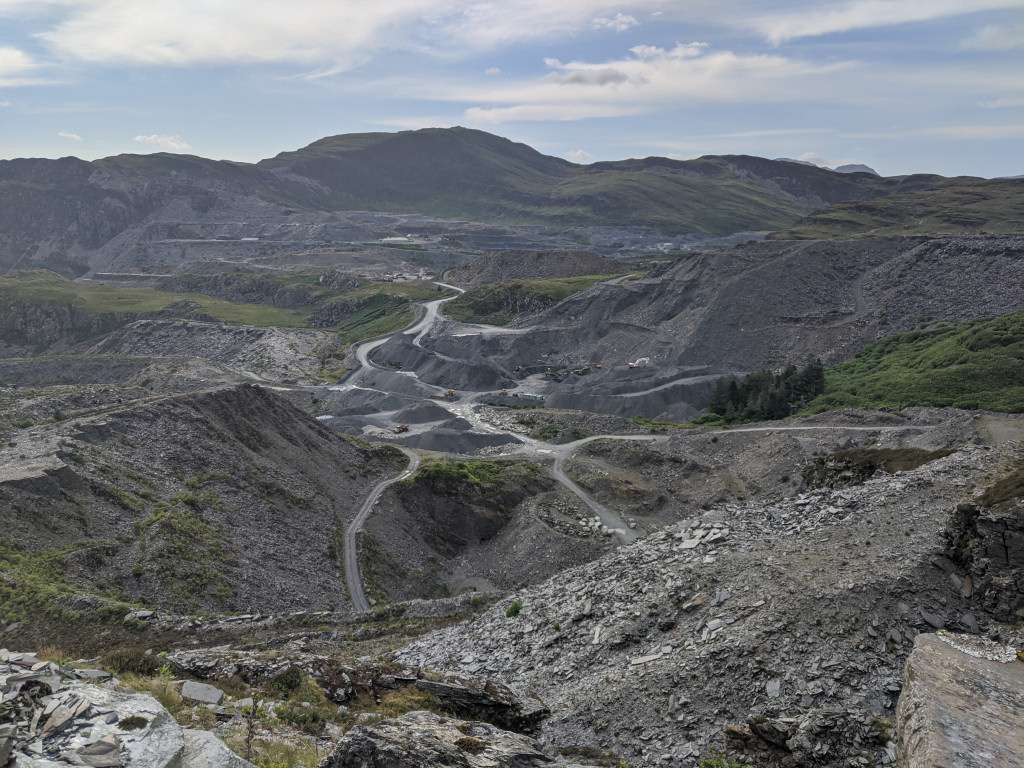



Site confused by tipping and modern untopping.**
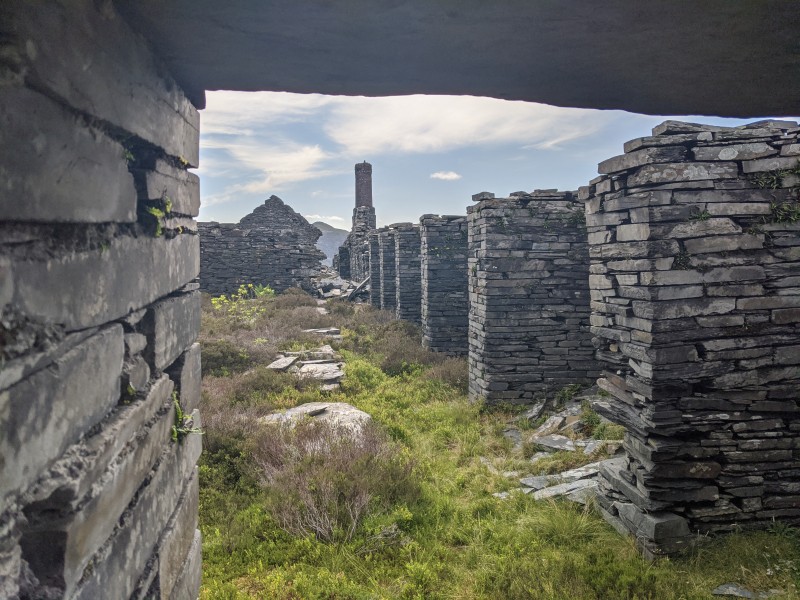
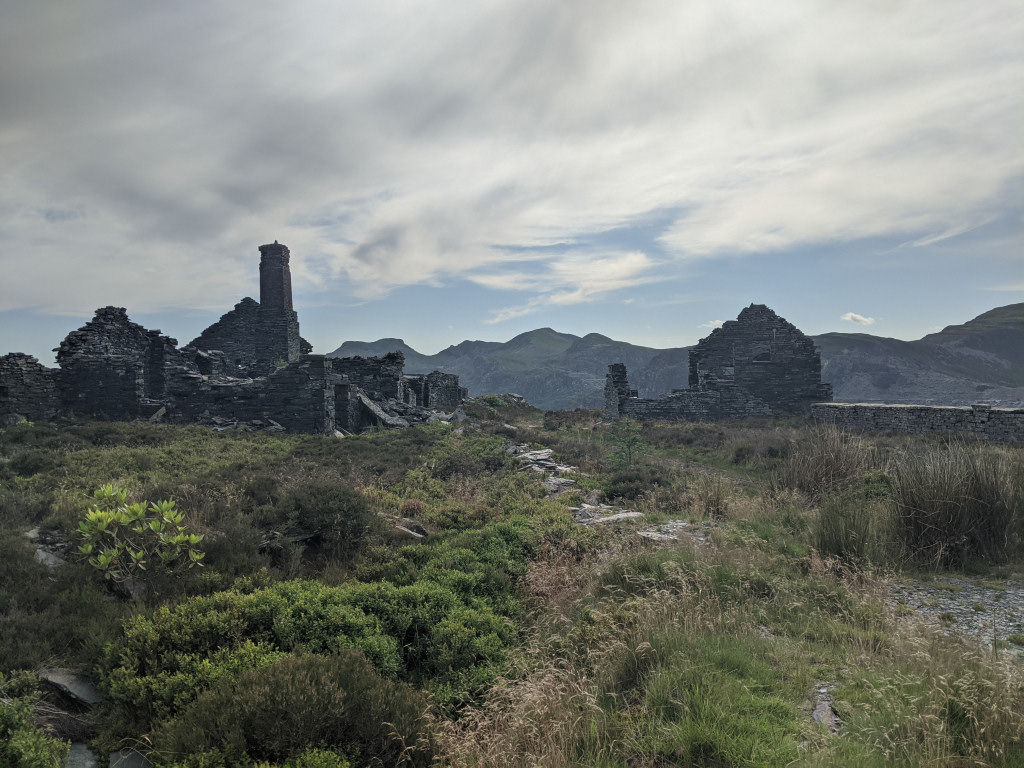
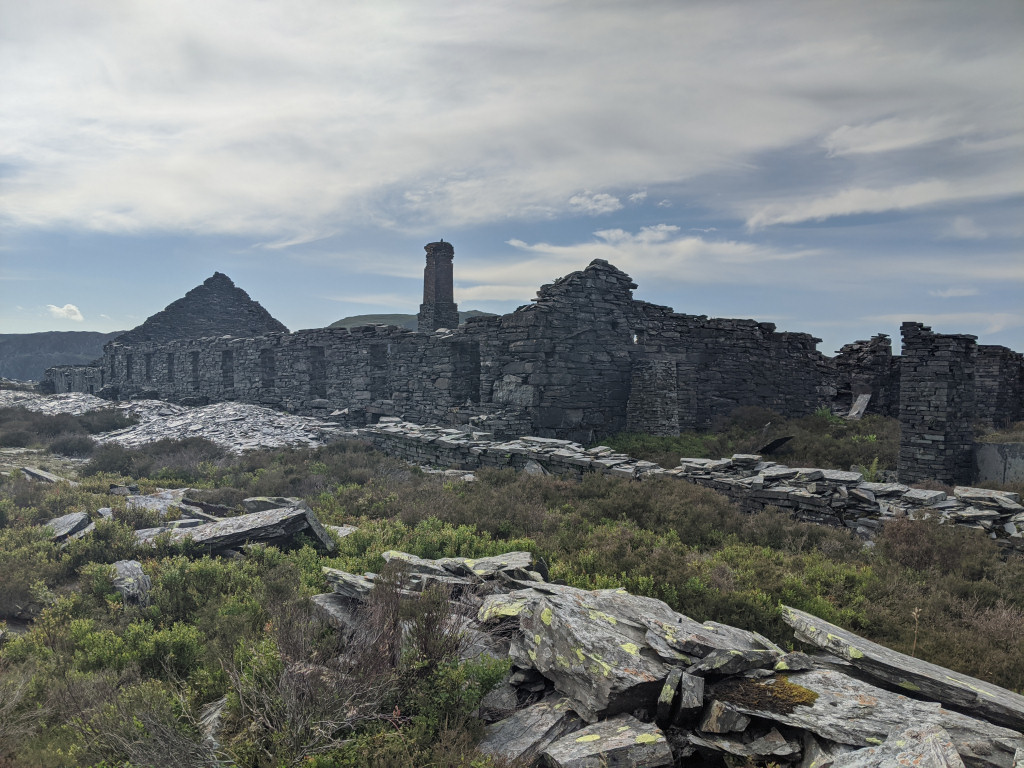
Modern untopping and access roads have significantly altered the site’s layout, and lower areas show intermixing with the neighbouring Bowydd quarry, linked by a shared tipping tramway. The earliest structures survive at the top of the site, notably including massive-block weigh houses. Visible evidence of historical operations includes ponds, an embanked leat, and stretches of tramway featuring wide-gauge slate sleepers. The original Hen Gwaith workings have been largely removed by subsequent Drum Boeth activity, though the New Quarry area retains adits, buildings, and tramway remains. A collapsed tunnel once connected the New Quarry to the Upper Mill via two inclines, and a notable flight of steps survives near the lower incline.
Several drum houses remain on site, with some converted for electric winding or other purposes. The No. 6 mill’s walls survive intact, along with a rubbish track and wagon still in place. Fragments of the original guillotine dressers are scattered across the site. Recent untopping has buried lower levels and early buildings under debris, though it has also exposed underground chambers and inclines, some of which still retain their original rails. The main incline sustained partial destruction during 1980s landscaping work, though its drum house survived. This surviving main drum house features a distinctive two-part drum with a central brake and later served the Bowydd quarry via a mid-run hitching arrangement. Many of the houses surrounding the quarry site were originally built as workers’ properties associated with the quarry operation.
Methusalem Jones opened this quarry in the 1760s, reportedly inspired by a dream, and established the first organised slate quarry in the district. The operation pioneered the use of saws, inclines, and internal tramways, initially operating a distinctive 3’4½“ gauge plateway before later adding 2’2“ edge rails. This gauge incompatibility proved problematic for integration with the nearby Ffestiniog Railway, prompting the quarry to build its own Pant yr Ynn mill in 1845 rather than rely on external transport. The quarry operated an earlier small water-powered sawmill and subsequently expanded operations with No. 4 mill, followed by the construction of No. 6 steam mill in 1861, which became the area’s first integrated mill. This facility featured a distinctive guillotine-type dresser driven by overhead shafting.
The quarry’s extraction methods evolved significantly over time. Work began in open workings at Hen Gwaith high on the site and progressively moved downhill, eventually advancing to serious underground extraction lower down the hillside. The Drum Boeth area near the early workings was developed later, and in 1882 the quarry launched the ambitious New Quarry underground venture, though this ultimately proved unsuccessful. Production reached over 6,000 tons annually by the early 1820s, making the quarry a dominant force in local output. However, neighbouring quarries overtook it during the mid-19th-century boom, though the quarry regained strength during the 1870s after earlier declines.
The twentieth century brought significant changes. The quarry became semi-derelict in the 1890s but was reopened and electrified in the 1920s, when it operated 23 saws and dressers—roughly half of its peak machinery capacity. Operations continued on a diminishing scale until closure in the mid-1950s. The quarry’s final chapter involved untopping work carried out by Llechwedd beginning in the 1980s.
Publications (15)
- BGS - Mine Plans (large, zoomable) - Diphwys Casson Slate Quarries; 1 pages
- BGS - Mine Plans (large, zoomable) - Diphwys Casson Slate Quarries; 1 pages
- BGS - Mine Plans (large, zoomable) - Llwechwedd Maenofferen And Diphwys Areas And Sections; 1 pages
- BGS - Mine Plans (large, zoomable) - Plan And Section Of The Diphwys Casson Slate Quarries In The Parish Of Festiniog County Of Merioneth; 1 pages
- BGS - Mine Plans (large, zoomable) - Plan And Section Of The Diphwys Casson Slate Quarries In The Parish Of Festiniog County Of Merioneth; 1 pages
- BGS - Mine Plans (large, zoomable) - Plan And Section Of The Diphwys Casson Slate Quarries In The Parish Of Festiniog County Of Merioneth; 1 pages
- BGS - Mine Plans (large, zoomable) - Plan And Section Of The Diphwys Casson Slate Quarries In The Parish Of Festiniog County Of Merioneth; 1 pages
- BGS - Mine Plans (large, zoomable) - Plan Of Diphwy Casson Old Slate Quarry; 1 pages
- BGS - Mine Plans (large, zoomable) - Plan Of The Diphwys Casson Slate Quarry In The Parish Of Festiniog; 1 pages
- Gwyn, David, (2015); Welsh Slate: archaeology and history of an industry; Royal Commission on the Ancient and Historical Monuments of Wales; 9781871184518
- Lindsay, Jean (1974); History of the North Wales Slate Industry; David & Charles; pp.318; ISBN 0-71536-264-X
- Richards, Alun J. (2013); Slate Quarrying in Wales; Gwasg Carreg Gwalch; ISBN 1-84527-026-6
- Richards, Alun John (1991); Gazeteer of the Welsh Slate Industry, A; Gwasg Carreg Gwalch 978-0863811968
- Richards, Alun John, (1999); The Slate Regions of North and Mid Wales and their Railways; Gwasg Carreg Gwalch; 0863815740
- Richards, Alun John, (2002); Fragments of Mine & Mill in Wales; p.95 ; Gwasg Carreg Gwalch; 0863818129