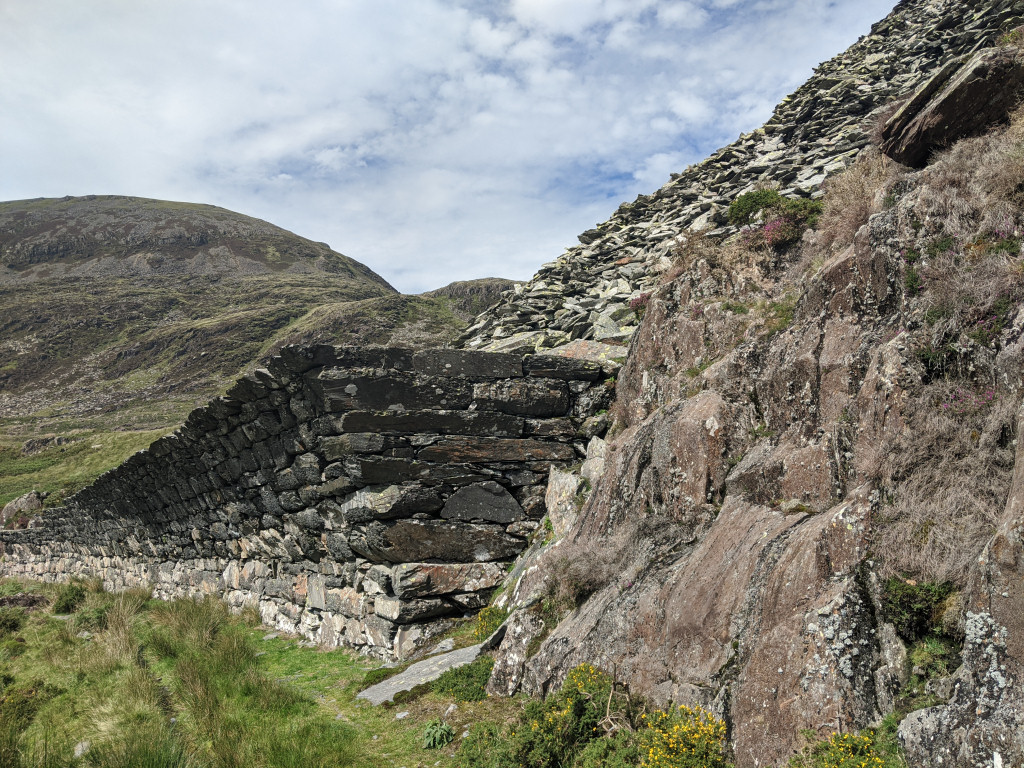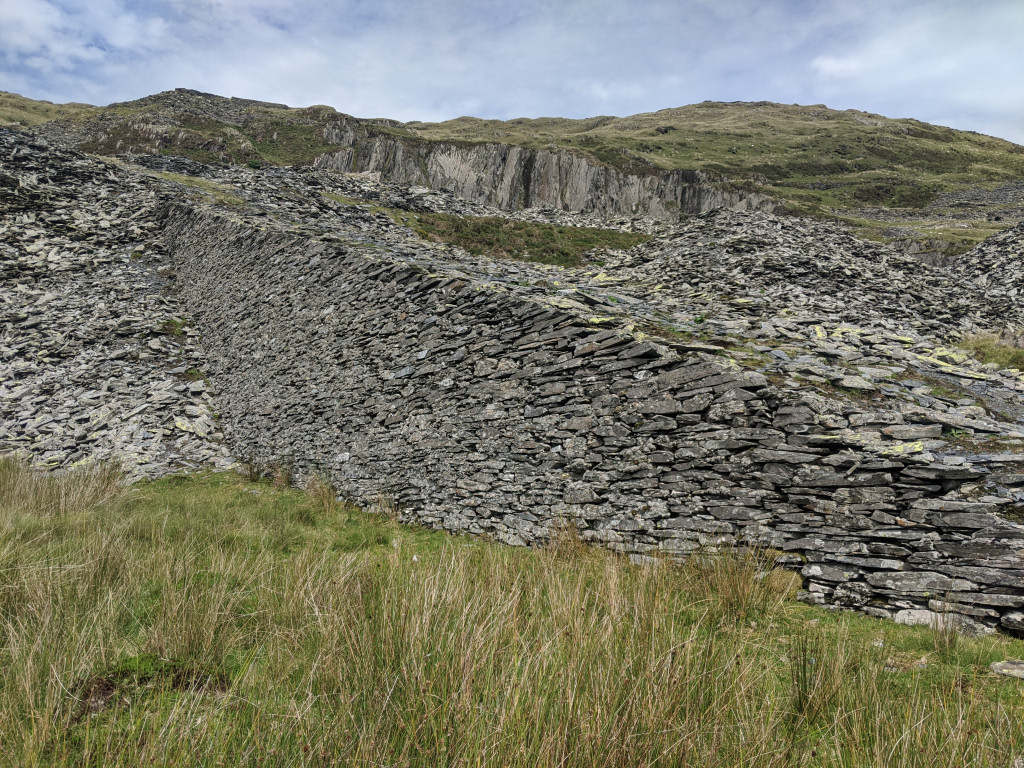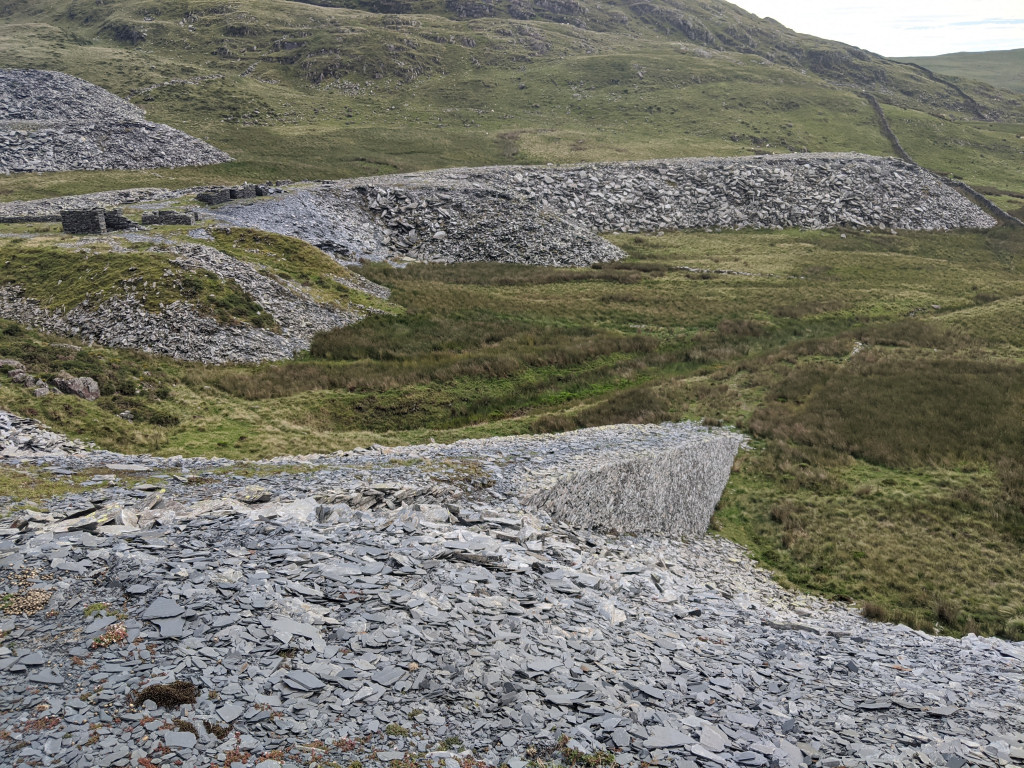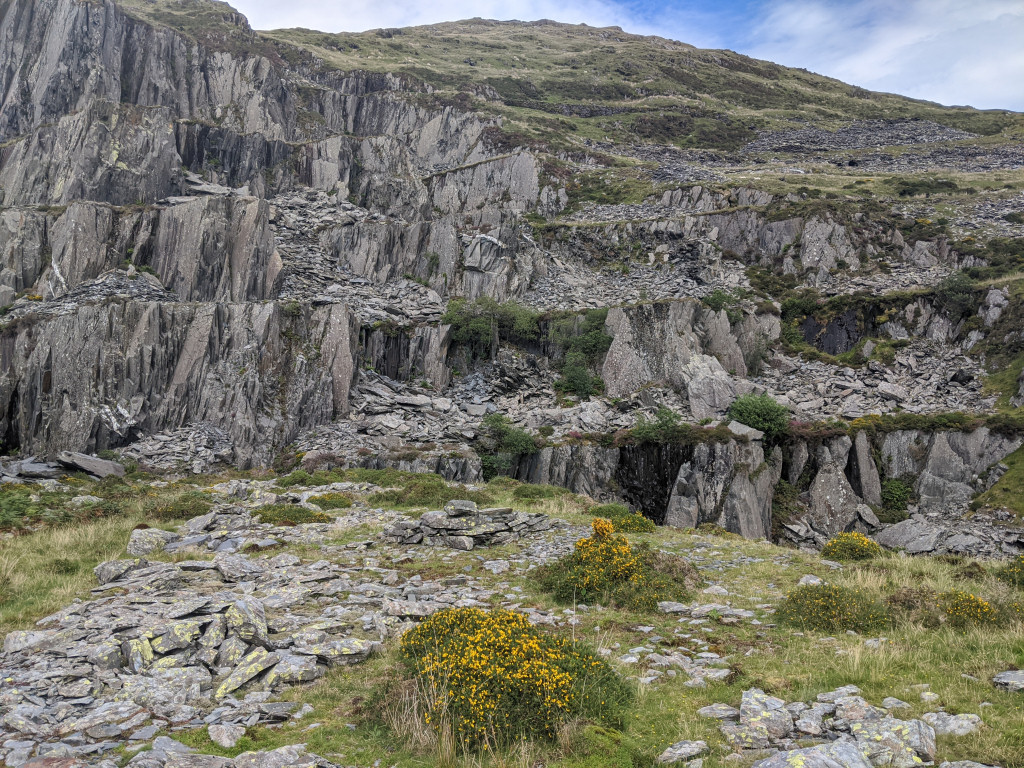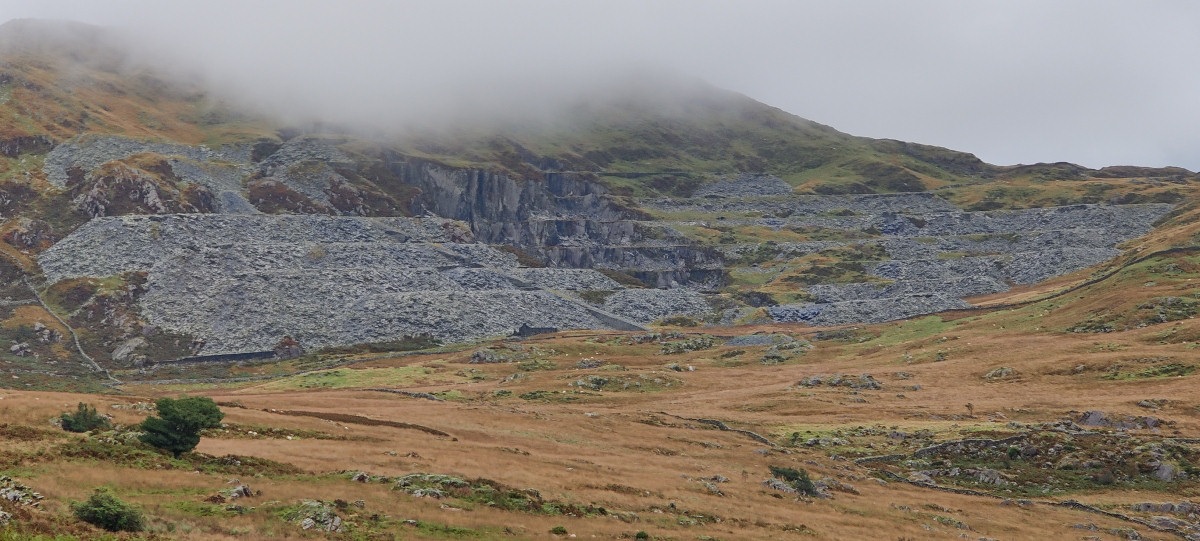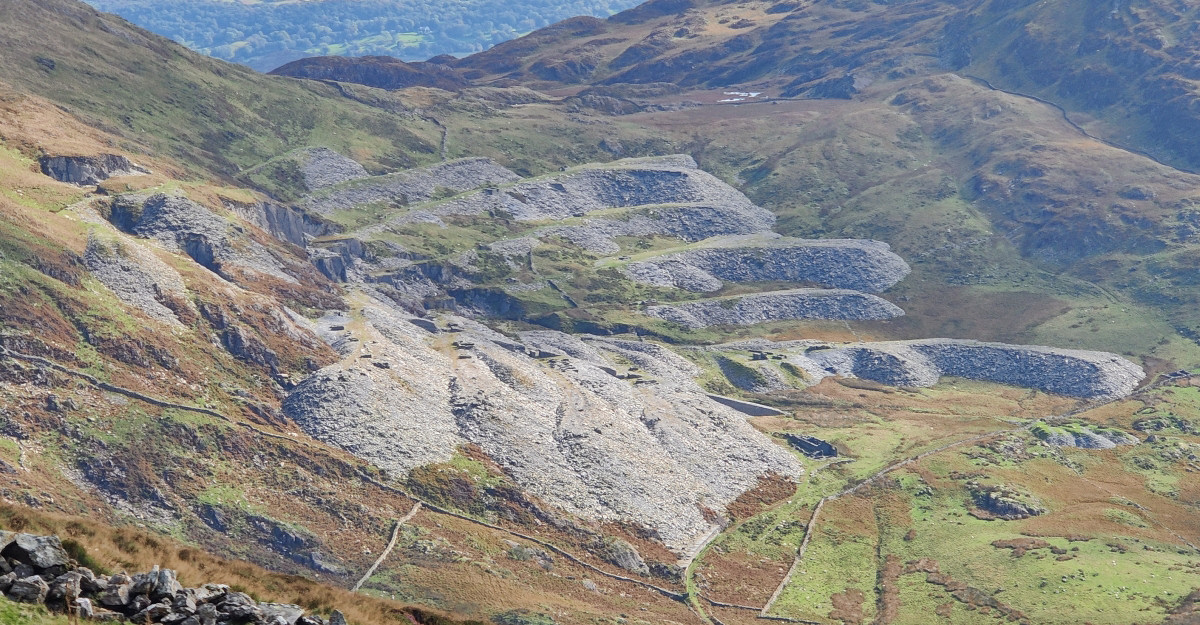



Four terrace development, mill at Nant-y-Pandy.****
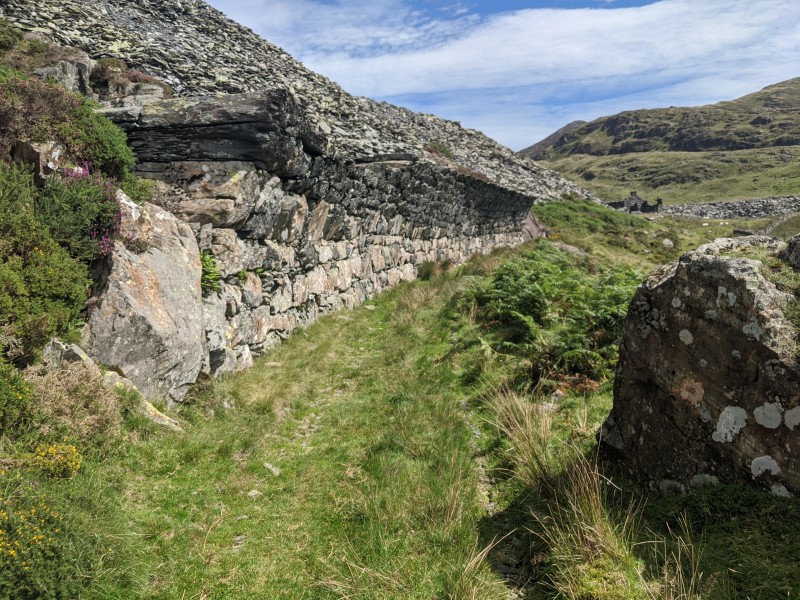
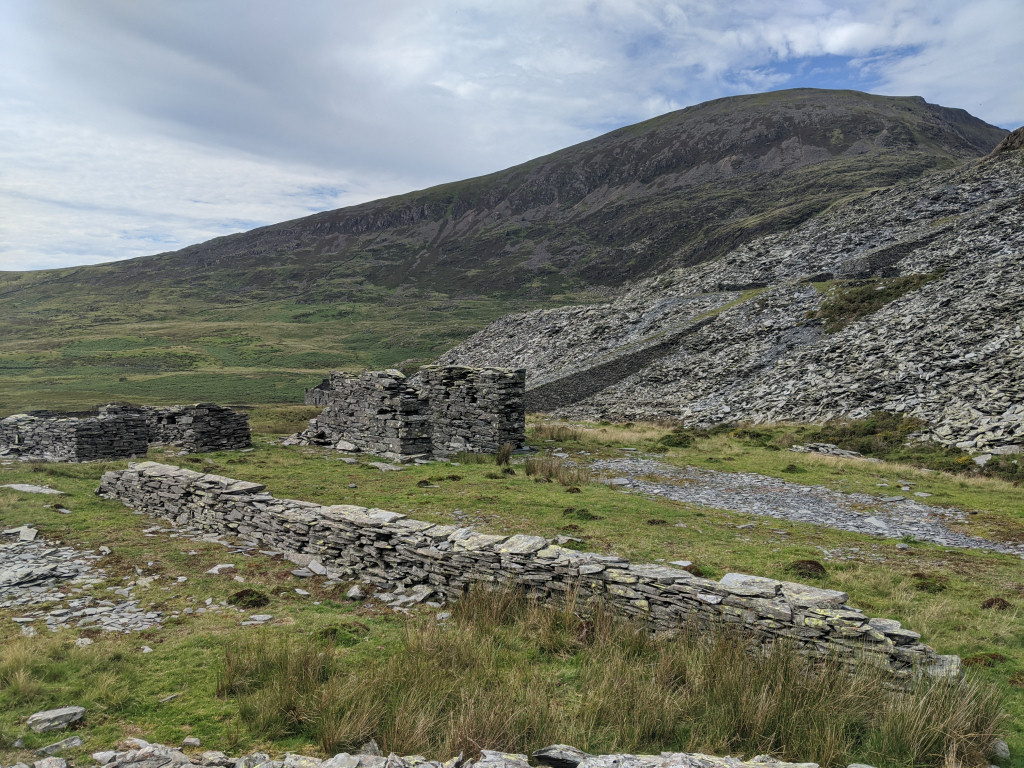
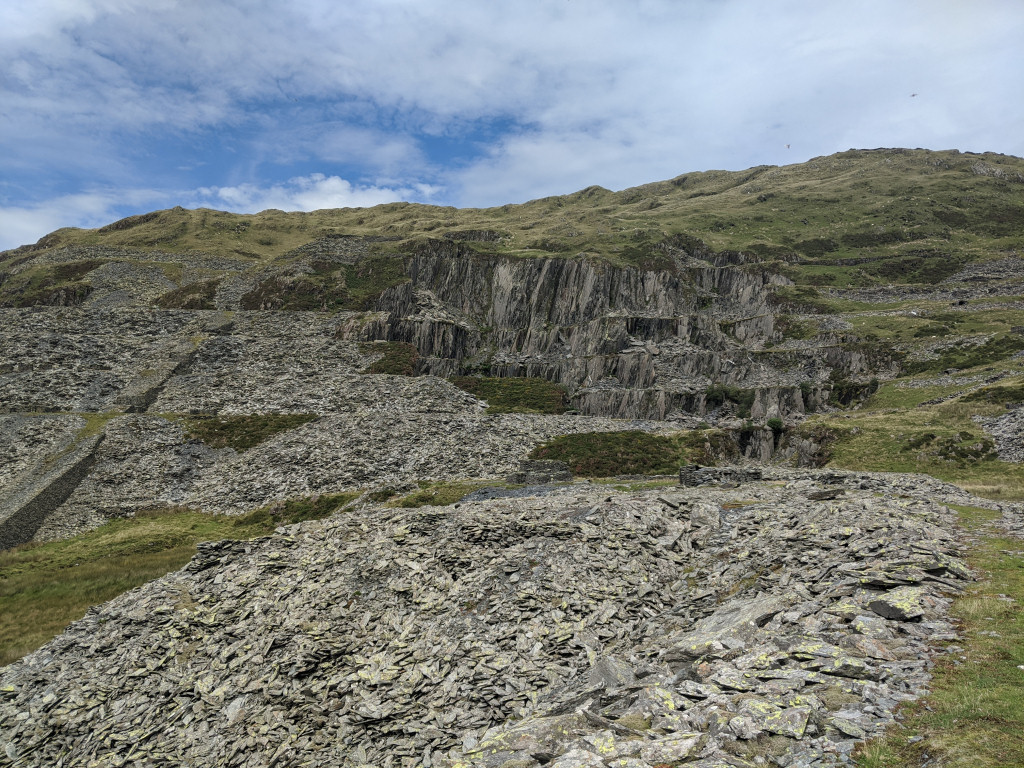
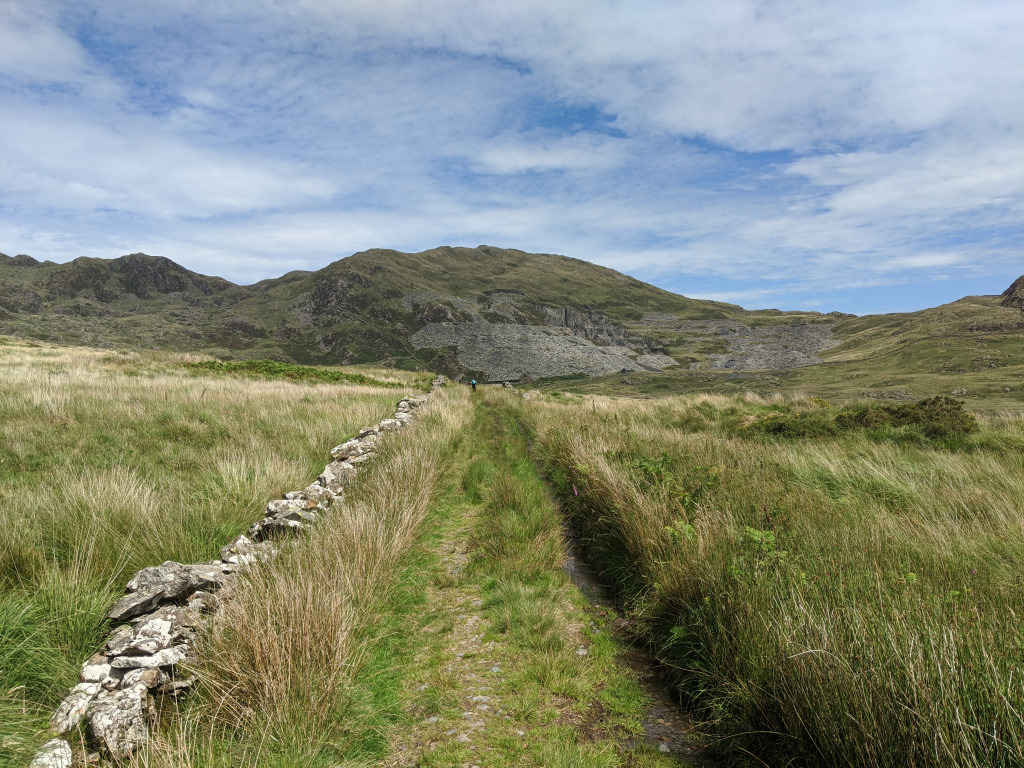
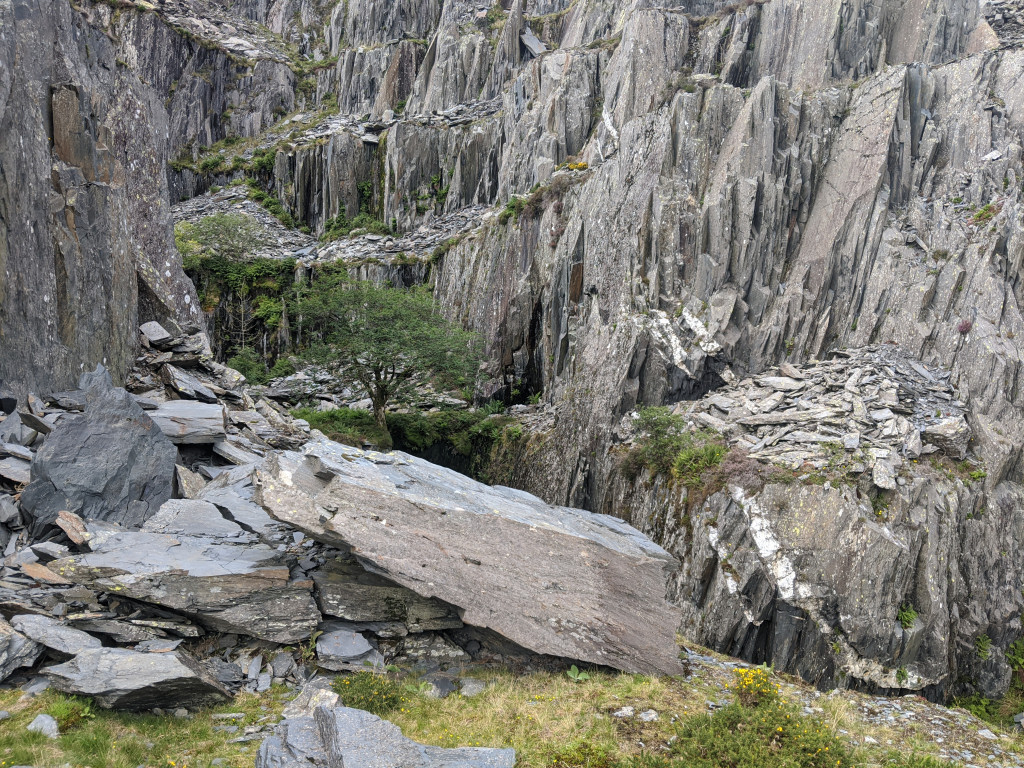
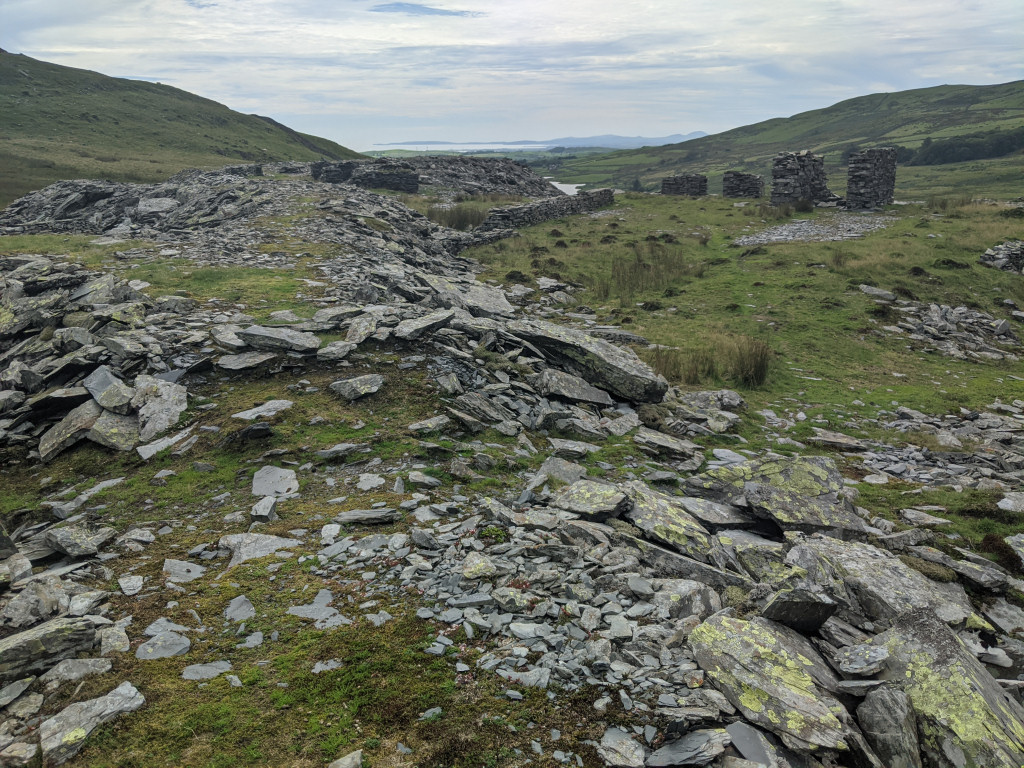
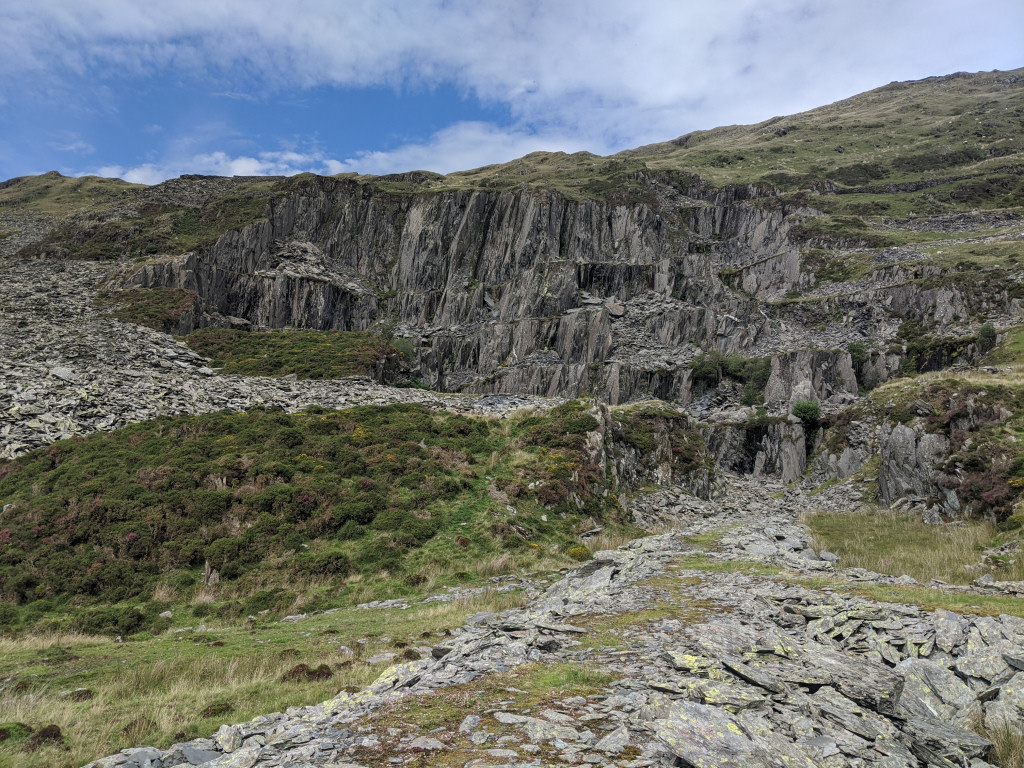
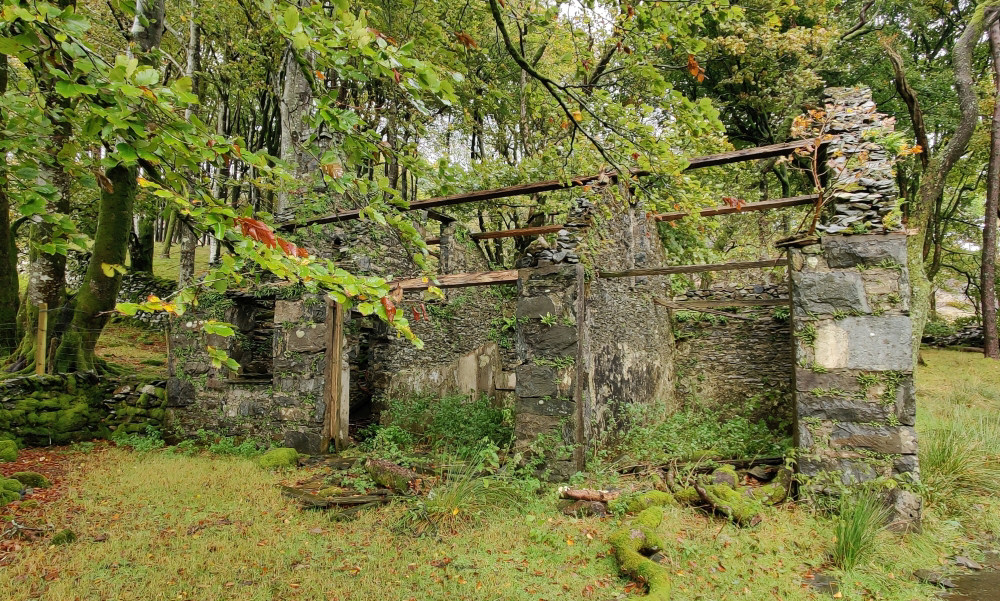
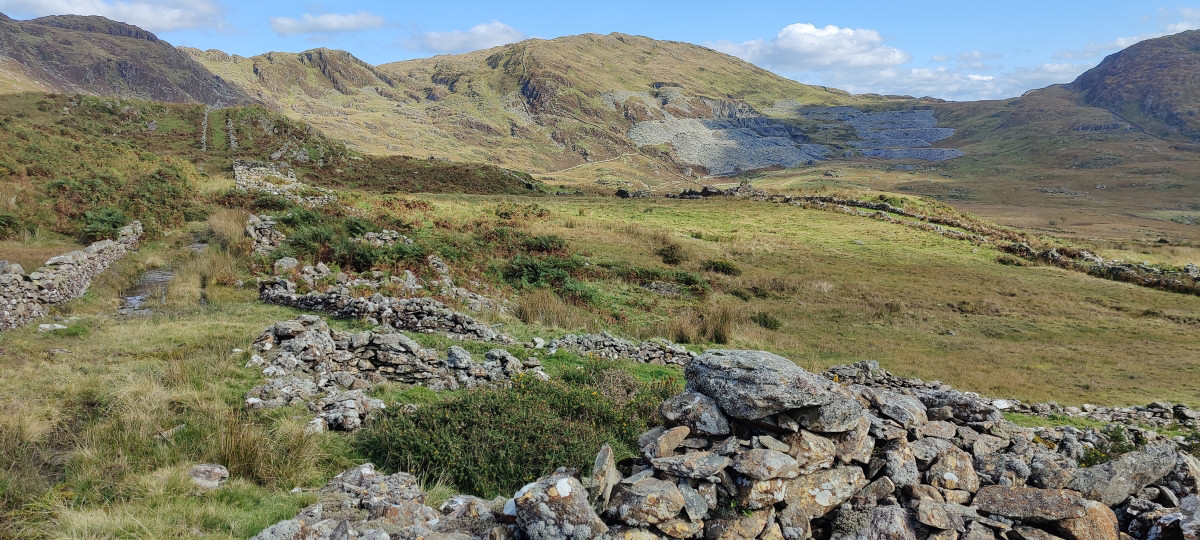
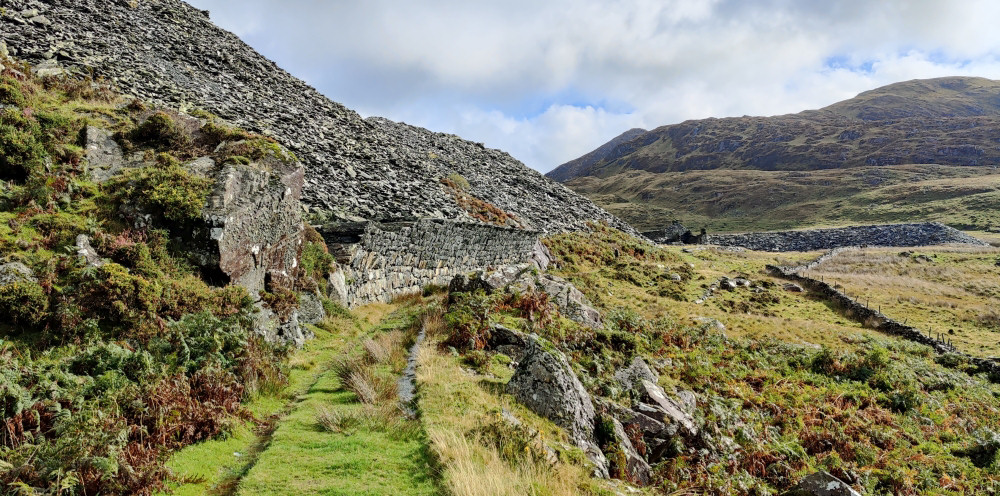
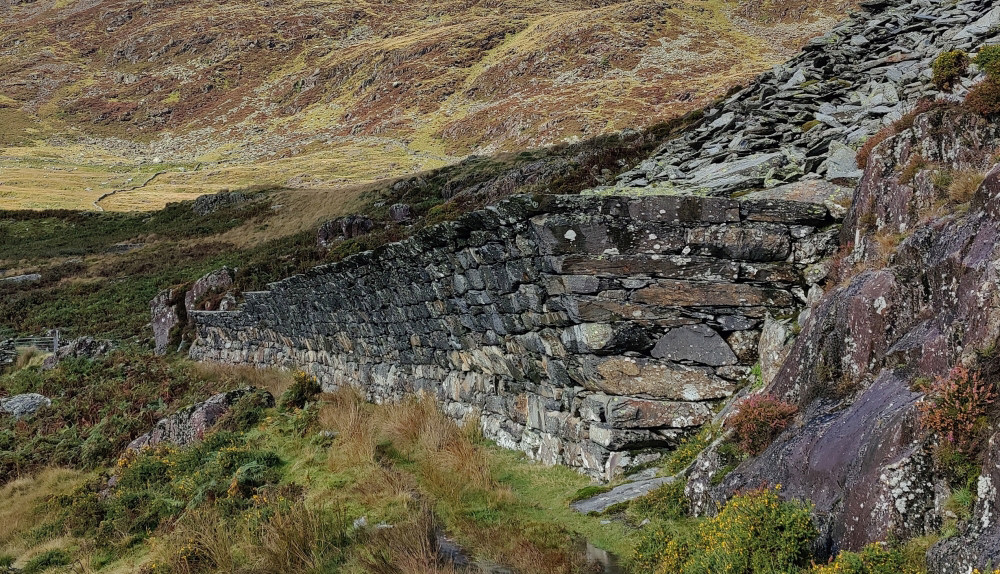
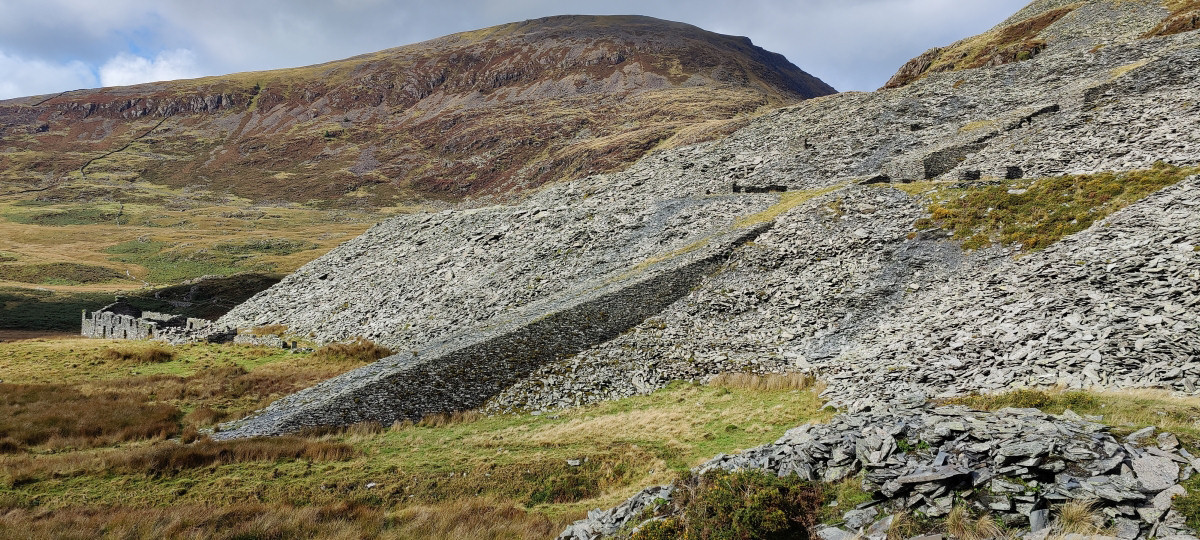
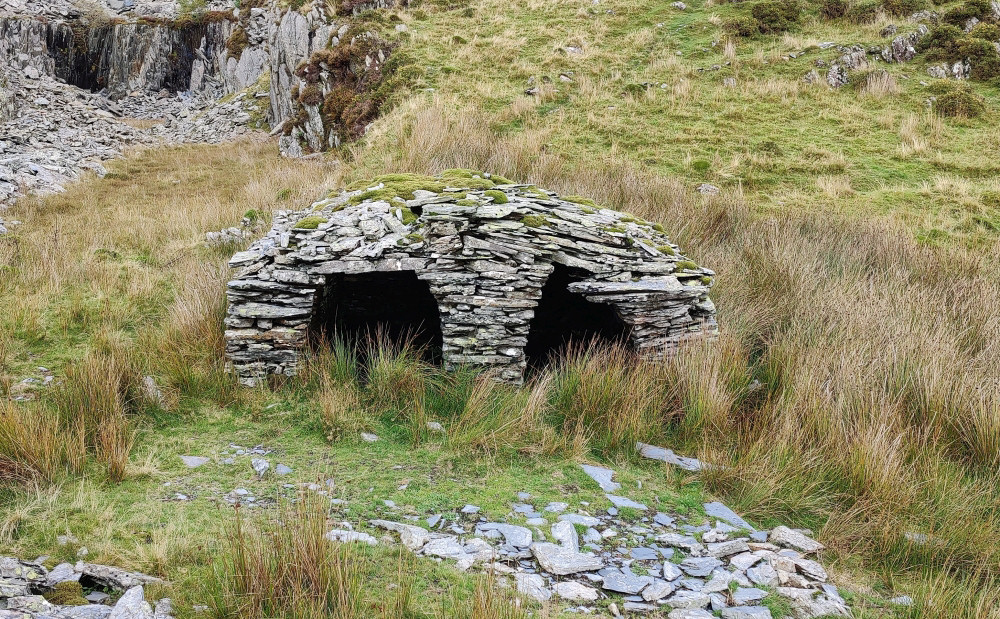
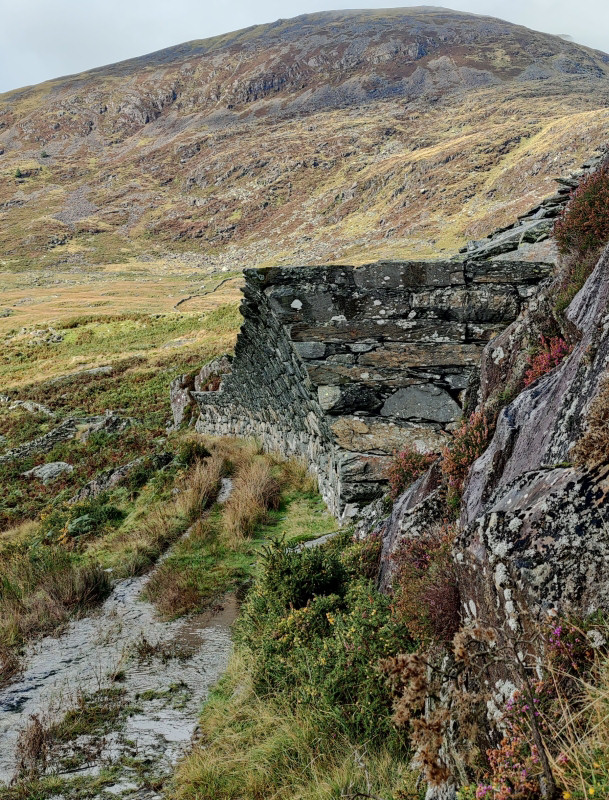
The site is littered with low-grade rubbish, reflecting the failed quarrying attempts on the four incline-served levels. Abortive work was attempted on three higher levels and a detached terrace, with a collapsed underground investigation near its foot, and random trials were frustrated by bad rock intrusions. The incline bridging the main terraces has differing apertures for two gauges: 2 ft for moving blocks around terraces and 3 ft for dispatching finished slates to the mill. Surviving 2 ft gauge sleepers are made from scrap slate, an example of Thomas Hughes rail. Several dressing sheds, blast shelters, and ancillary structures survive, along with what may have been a barrack block and stable. A slate slab with 1 inch holes may have been used to test a hand-cranked Dixon drill, while shot holes up to 3 inches were made by three-man machines. An overhanging curved wall prevents the huge tip from overwhelming the tramway. The track bed passes the site of the manager’s house and vestiges of 18 pairs of worker houses forming the village of Treforus, arranged in three streets. Covered leats carried water to the houses and manager’s residence. The tramway extends to the three-storey Ynys y Pandy mill and can be traced almost continuously to Porthmadog.
First active in the early 19th century before being spectacularly developed in 1855 on four levels. The quarrying operation involved extraction at one end and tipping at the other, linked by a central incline. A huge multi-storey mill was built at Ynys y Pandy, accompanied by extensive watercourses, worker housing, and a railway to Porthmadog. By 1859, 200 men were producing less than 1,400 tons per year, a derisory seven tons per man-year, though tonnage briefly peaked at 2,148 in 1860. The quarry closed in 1867, with sporadic activity afterward.
Publications (11)
- (1994); CATMHS - Newsletter 039-July; 37 pages
- (2001); CATMHS - Newsletter 065-October; 30 pages
- (2010); CATMHS - Newsletter 100-August; 36 pages
- (2013); CATMHS - Newsletter 112-August; 37 pages
- Gwyn, David, (2015); Welsh Slate: archaeology and history of an industry; Royal Commission on the Ancient and Historical Monuments of Wales; 9781871184518
- Lindsay, Jean (1974); History of the North Wales Slate Industry; David & Charles; pp.322; ISBN 0-71536-264-X
- NMRS; British Mining 78 - Memoirs 2005; p.113
- Richards, Alun J. (2013); Slate Quarrying in Wales; Gwasg Carreg Gwalch; ISBN 1-84527-026-6
- Richards, Alun John (1991); Gazeteer of the Welsh Slate Industry, A; Gwasg Carreg Gwalch 978-0863811968
- Richards, Alun John, (1999); The Slate Regions of North and Mid Wales and their Railways; Gwasg Carreg Gwalch; 0863815829
- Richards, Alun John, (2002); Fragments of Mine & Mill in Wales; p.28 ; Gwasg Carreg Gwalch; 0863818129