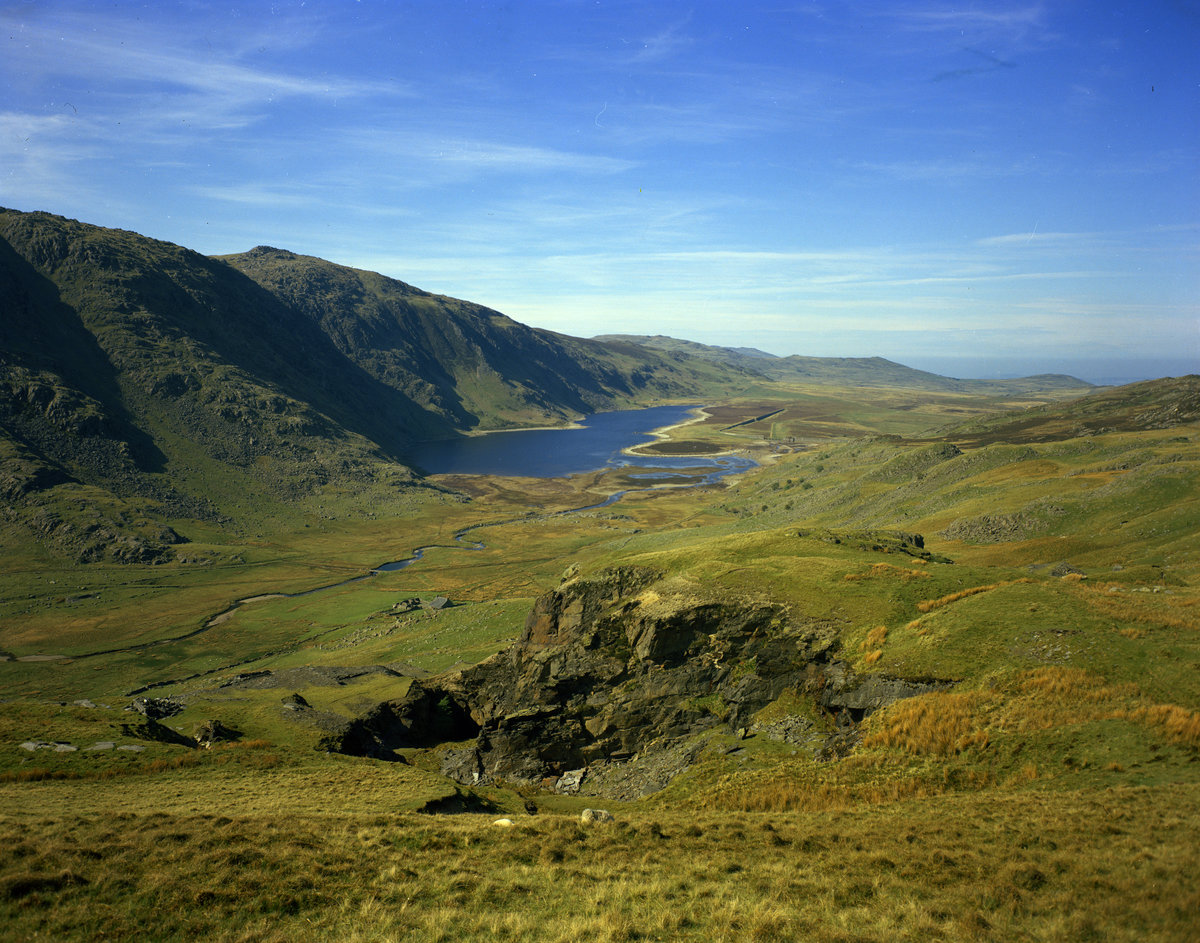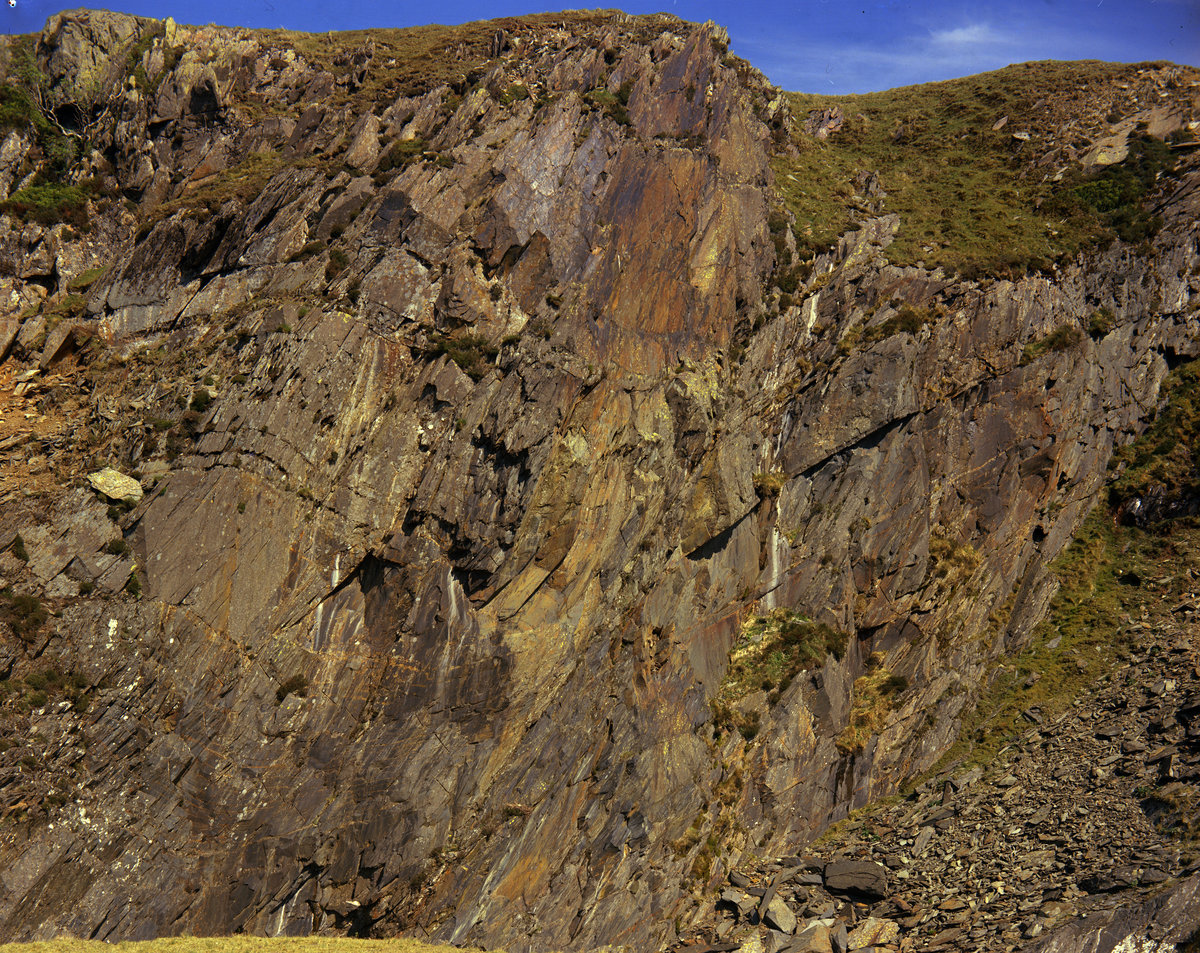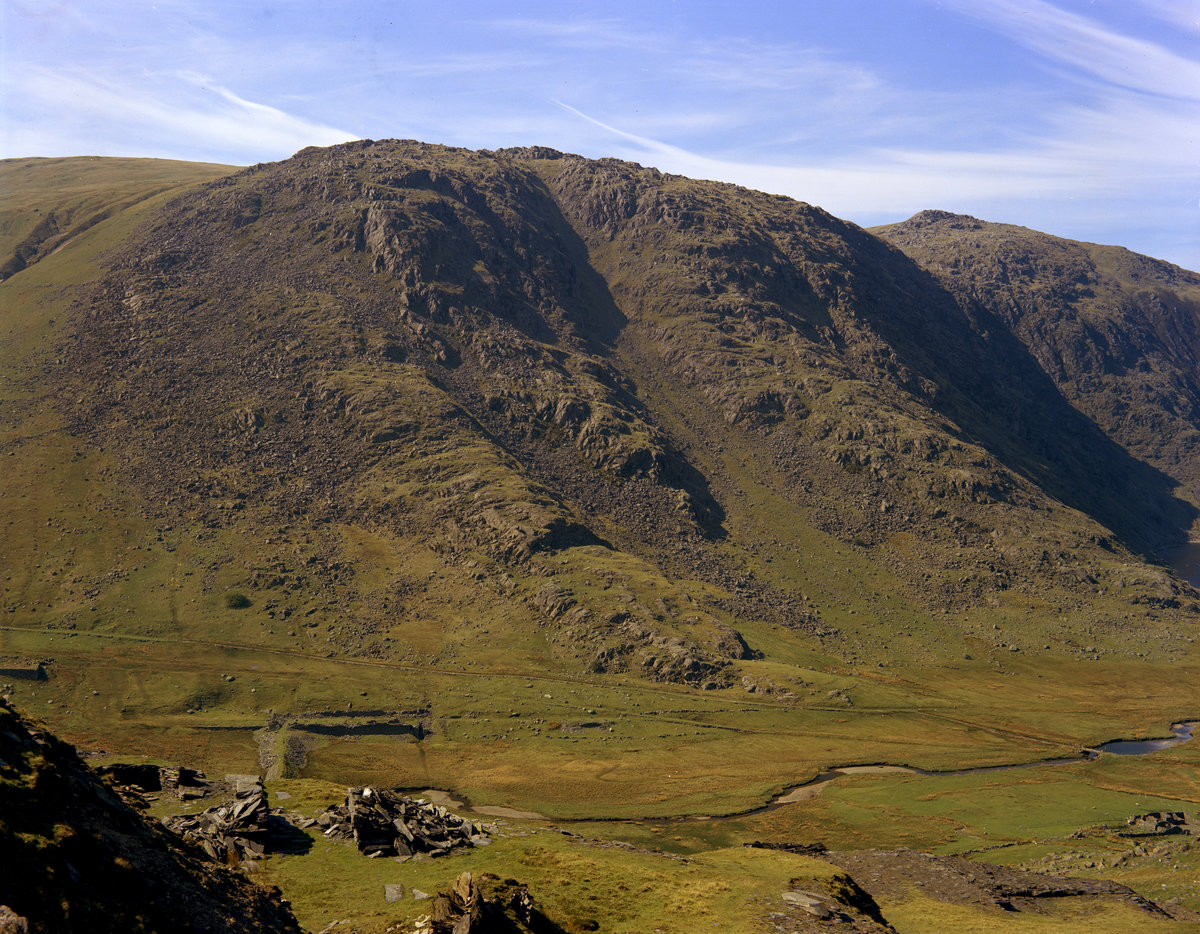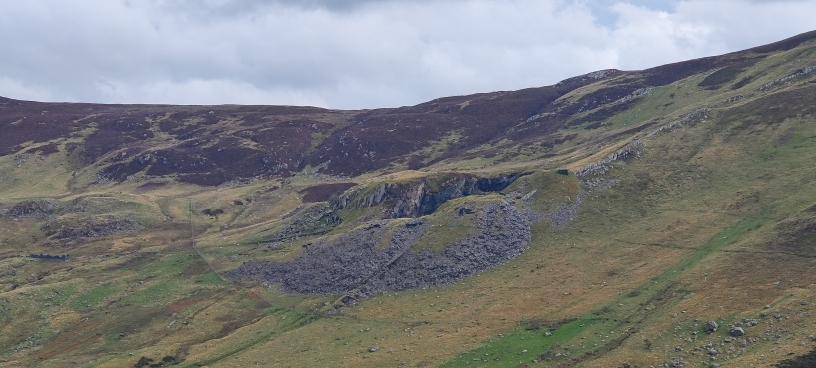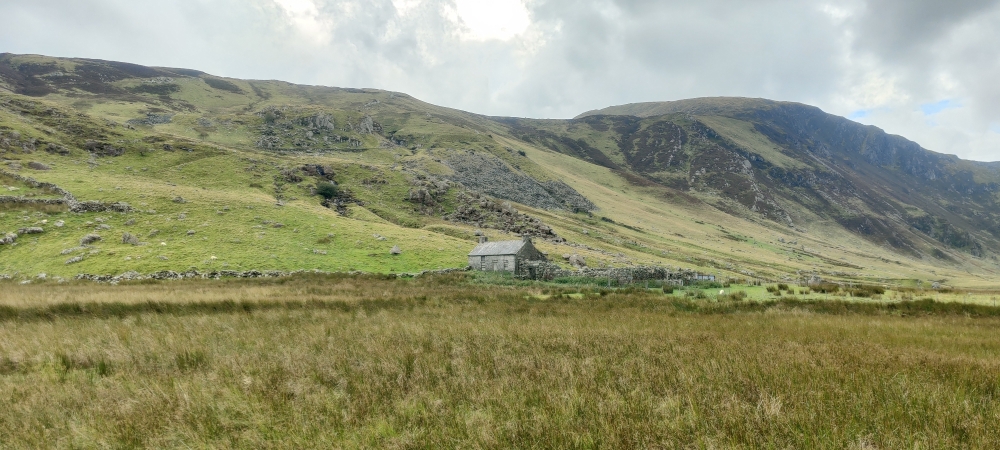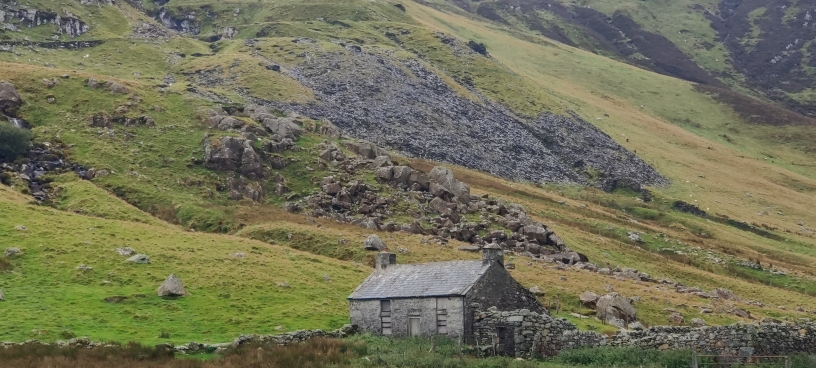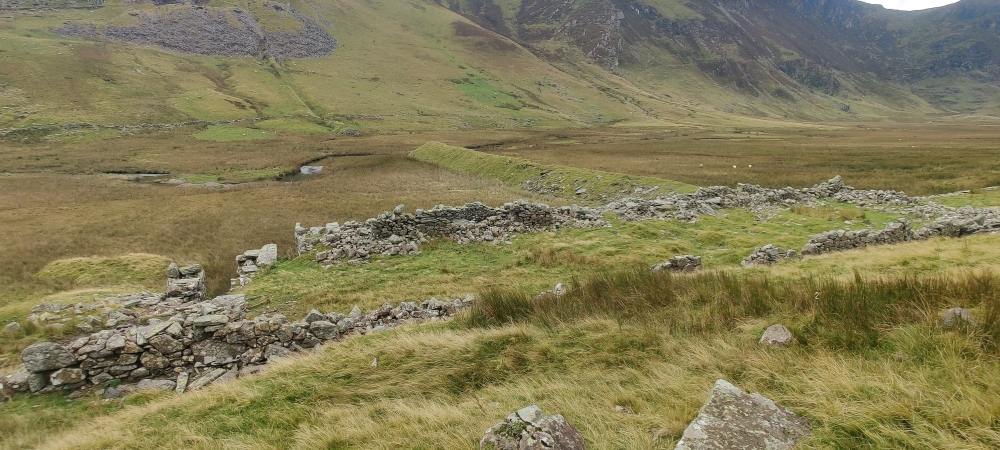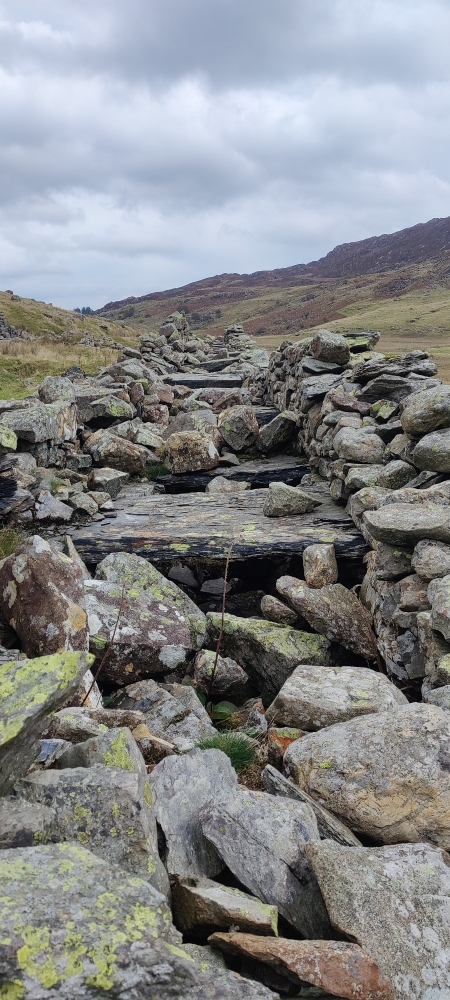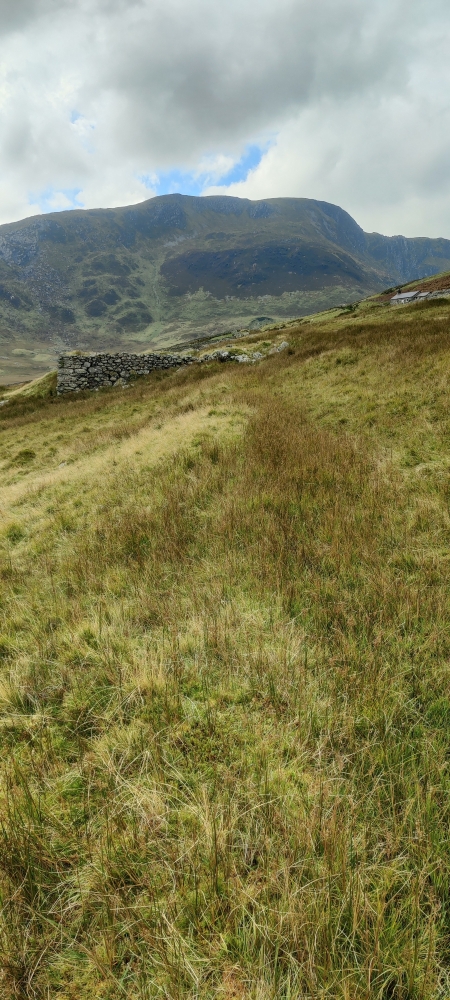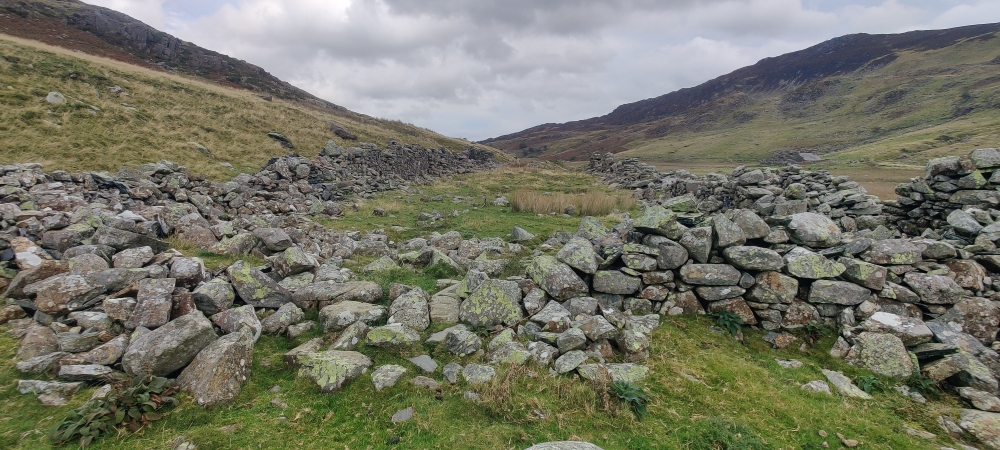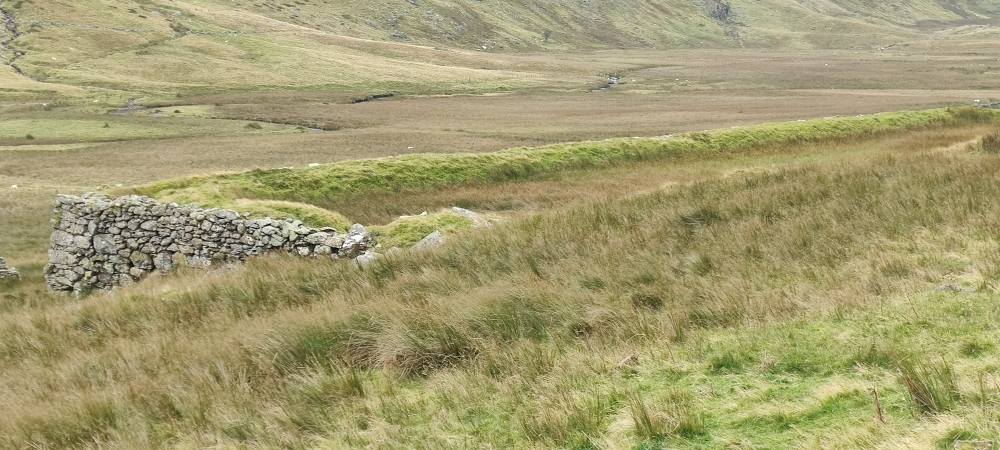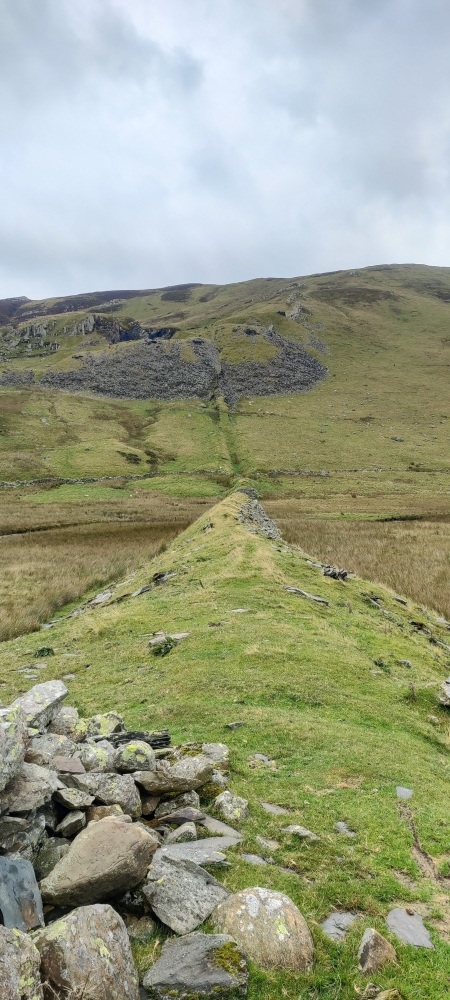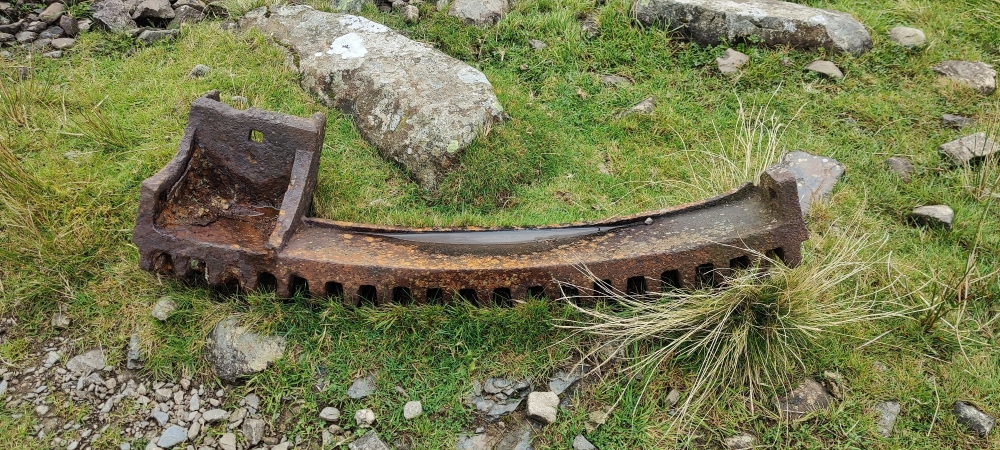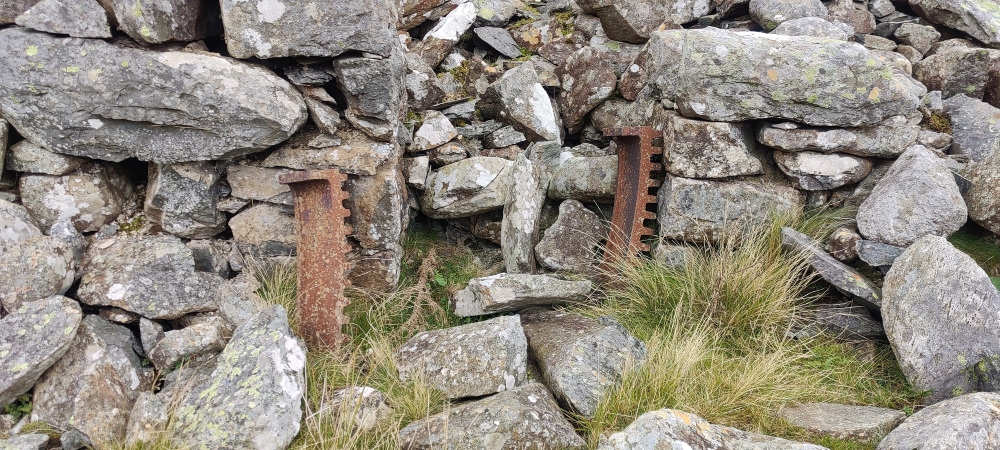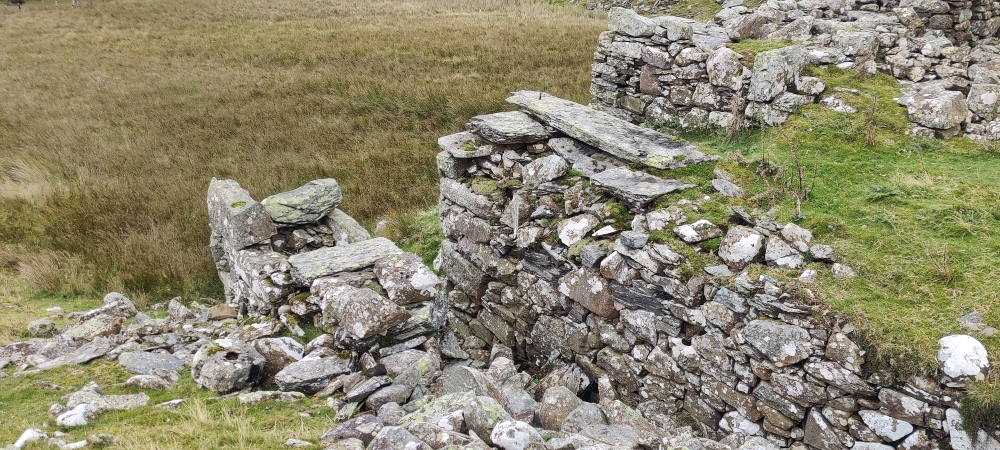



Substantial remains of the incline to the later mill and tramway though the wooden trestle bridge is long gone. Some small building remains around the quarry workings. The tramway is well made and easy to trace along most of it’s route.
See also the Cwm Eigiau quarry entry.
The output initially taken by pack horse to Tal y Cafn. A 5 mile long 2ft guage tramway was constructed 1861–1863 which took finished material to a quay on the River Conwy at Dolgarrog..
Some time between 1863 and 1866 the tramway was extended a further mile to Cwm Eigiau Quarry, and generally became known as the Cwm Eigiau Tramway. In 1874 the Caedryn Slate Quarry Co. Ltd of 1863 became the Caedryn & Cwm Eigiau Slate Co. Ltd. This was disolved in 1885 and the quarries in debt and out of use by 1888.
In 1907 the disused tramway was rebuilt to a wider guage for use by steam engines during the construction of Llyn Eigiau reservoir.
CRoW land. Easy access via public RoW
External Links
Publications (7)
- (1988); WMS Newsletter Issue 18 May; 12 pages
- Gwyn, David, (2015); Welsh Slate: archaeology and history of an industry; Royal Commission on the Ancient and Historical Monuments of Wales; 9781871184518
- Lindsay, Jean (1974); History of the North Wales Slate Industry; David & Charles; pp.313; ISBN 0-71536-264-X
- Richards, Alun J. (2013); Slate Quarrying in Wales; Gwasg Carreg Gwalch; ISBN 1-84527-026-6
- Richards, Alun John (1991); Gazeteer of the Welsh Slate Industry, A; Gwasg Carreg Gwalch 978-0863811968
- Richards, Alun John, (1999); The Slate Regions of North and Mid Wales and their Railways; Gwasg Carreg Gwalch; 0863815629
- Richards, Alun John, (2002); Fragments of Mine & Mill in Wales; p.19 ; Gwasg Carreg Gwalch; 0863818129