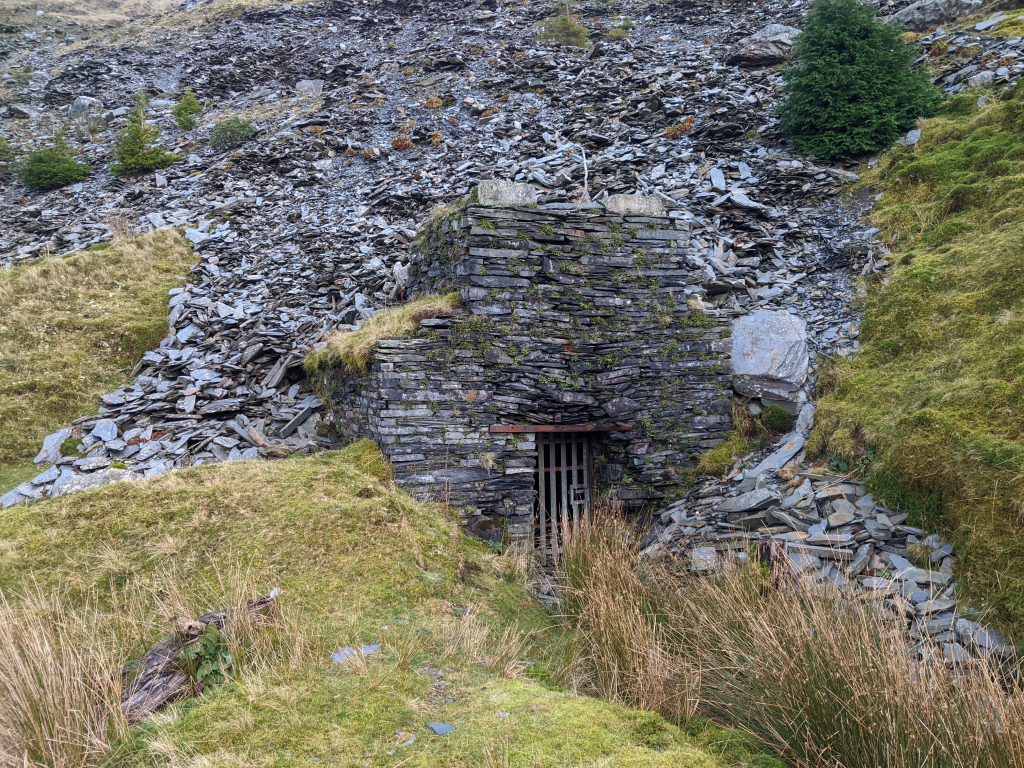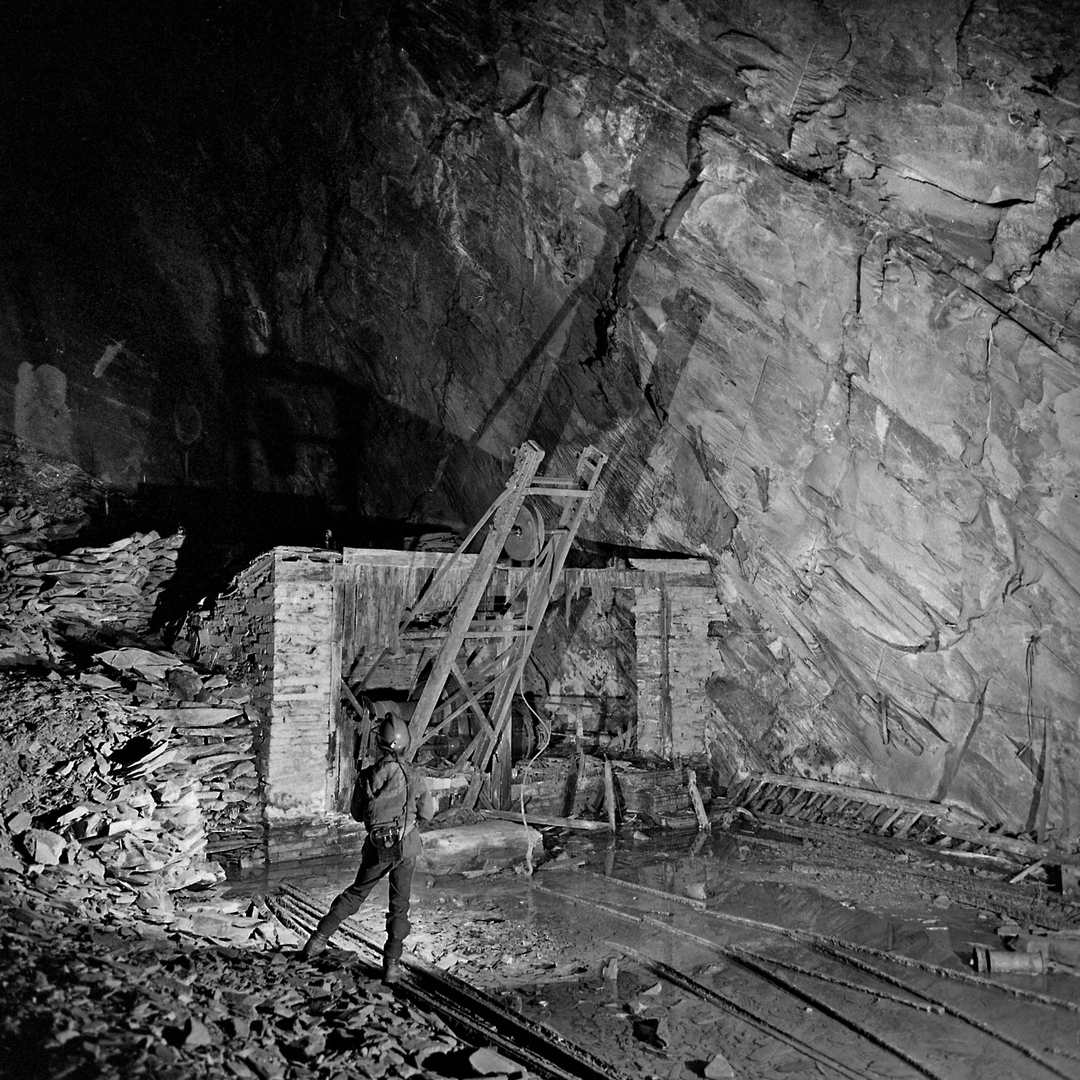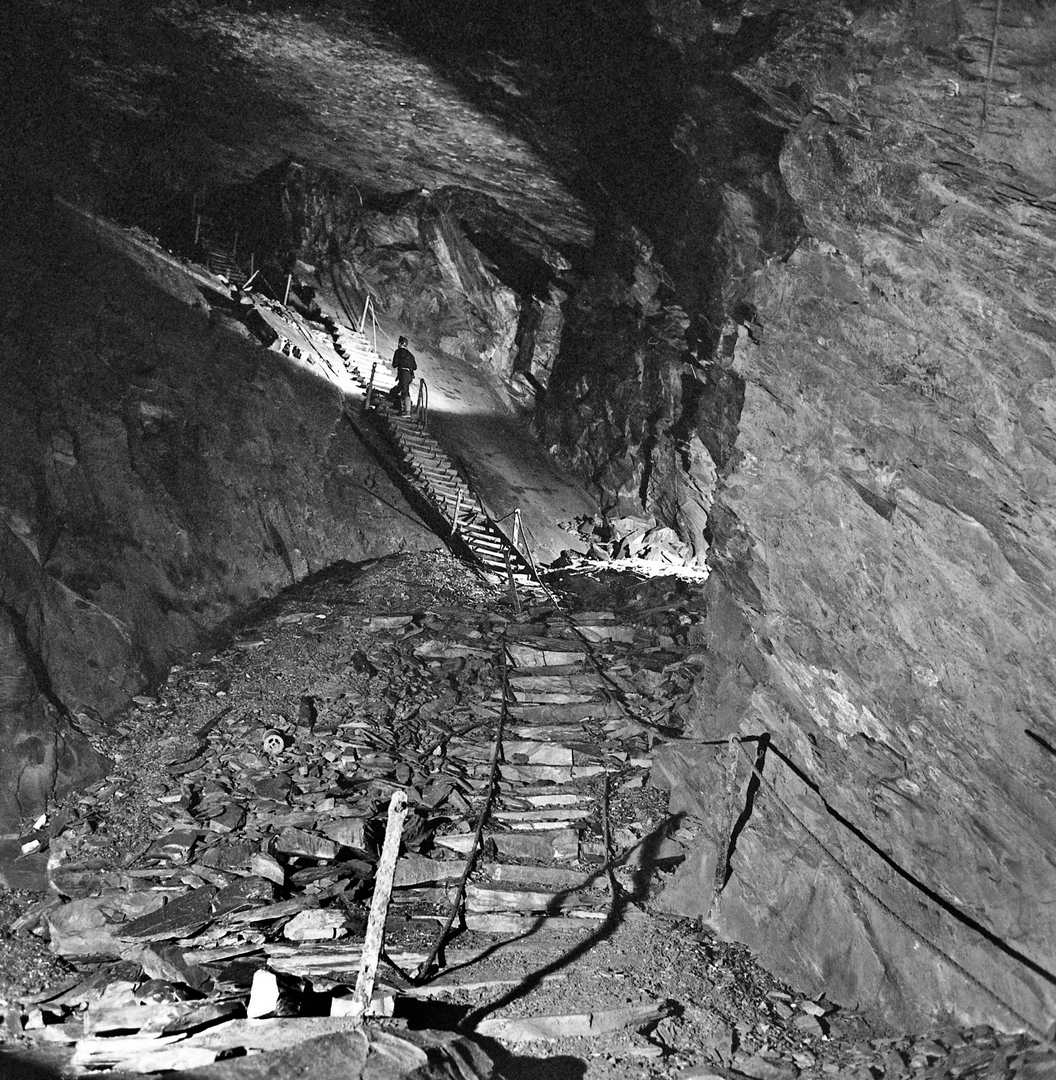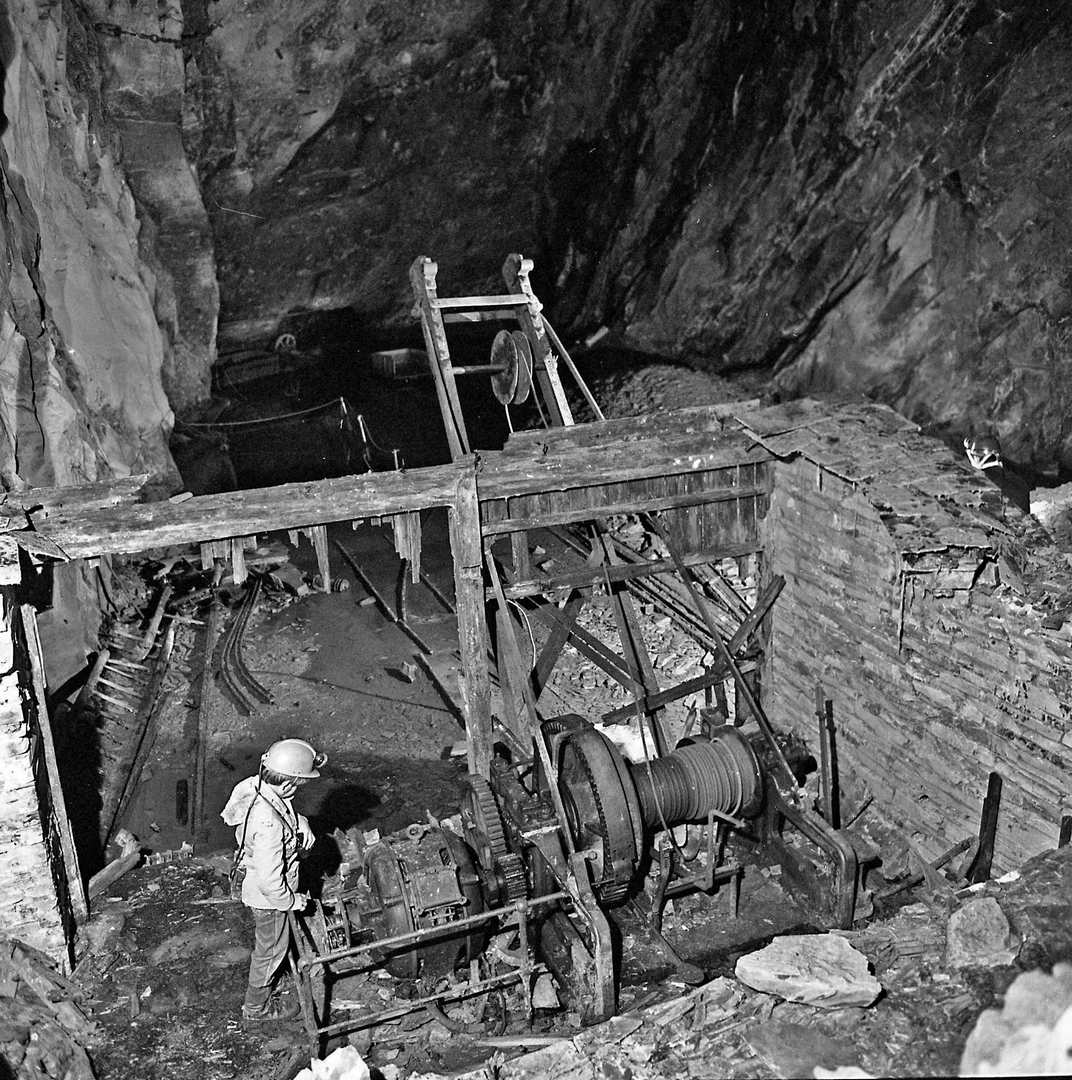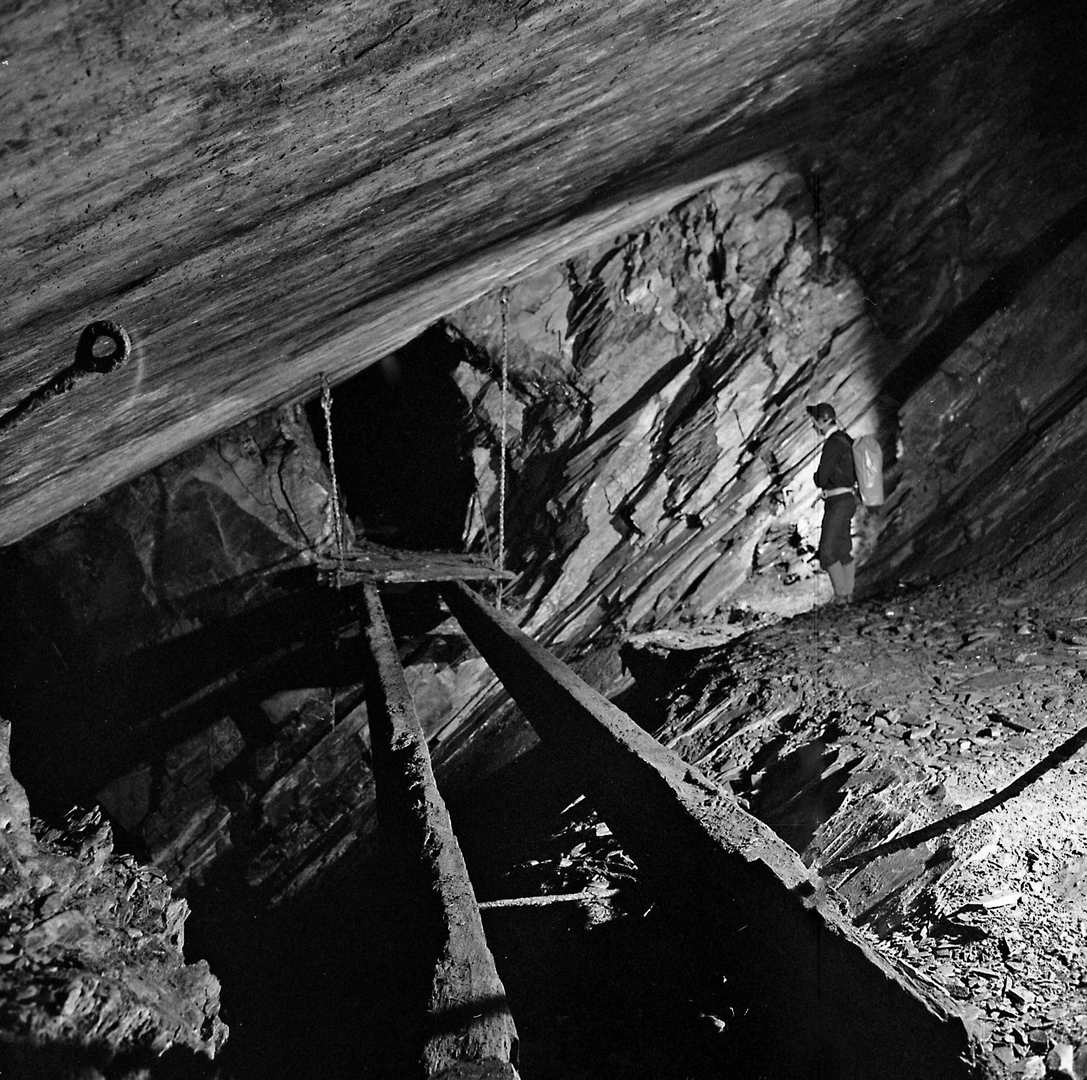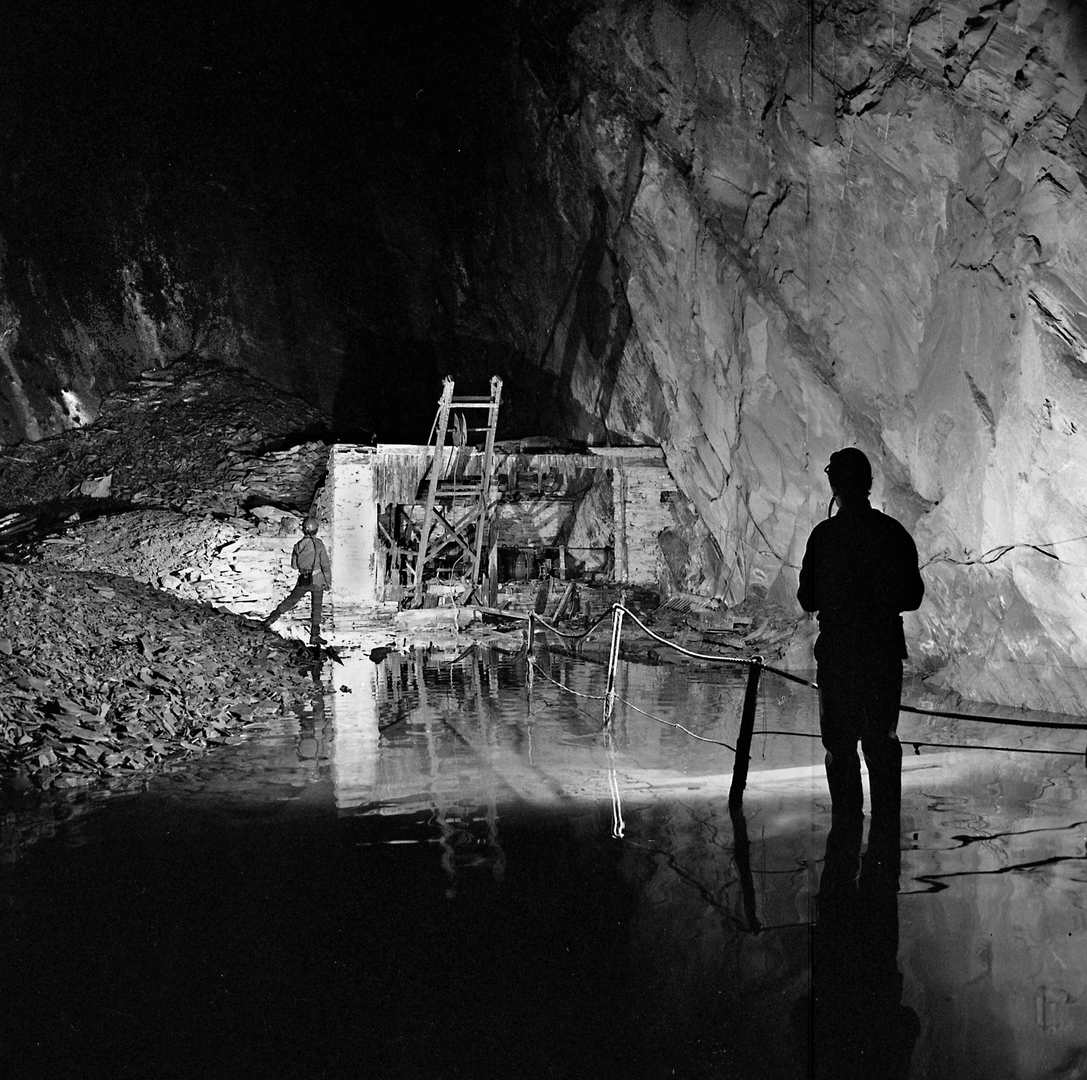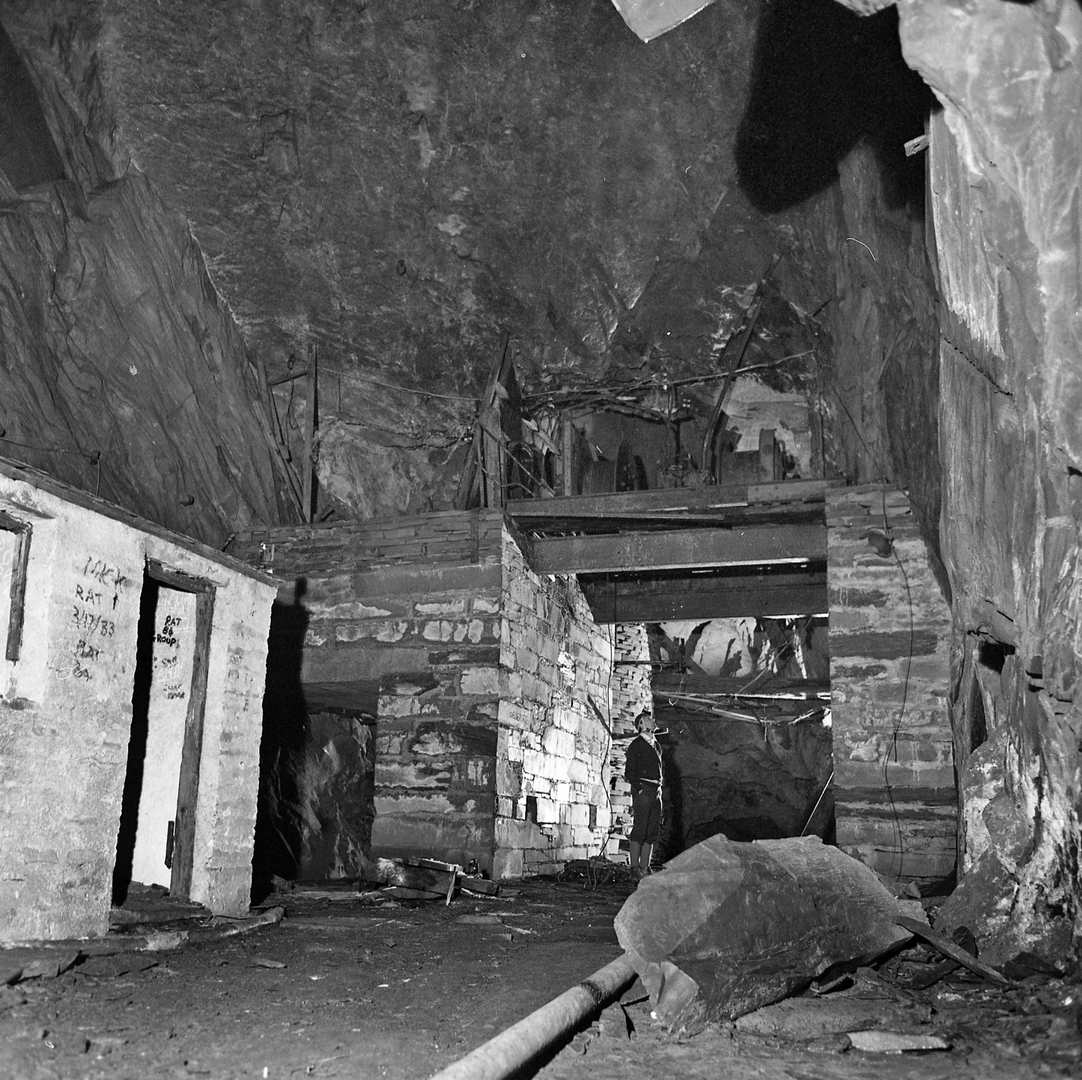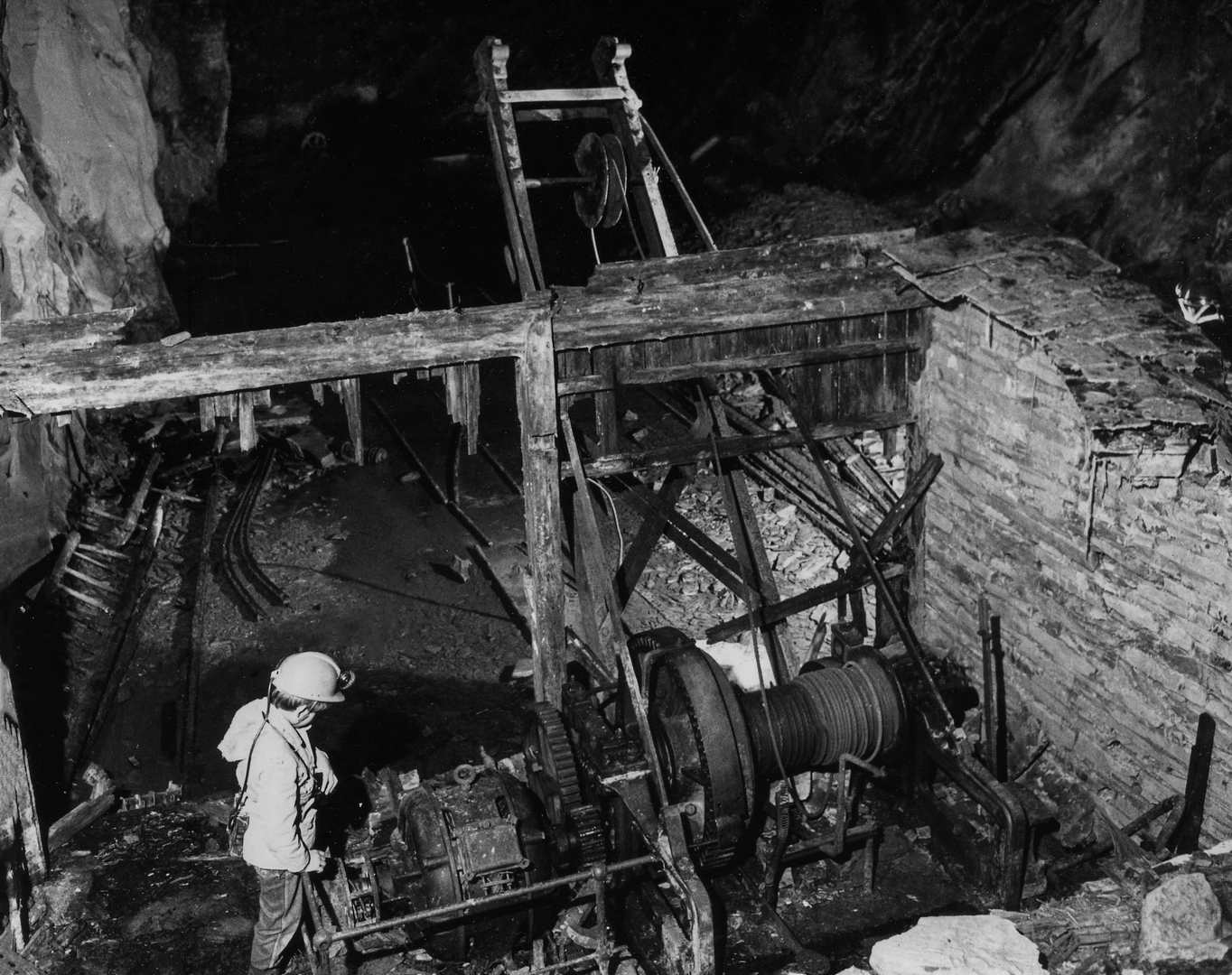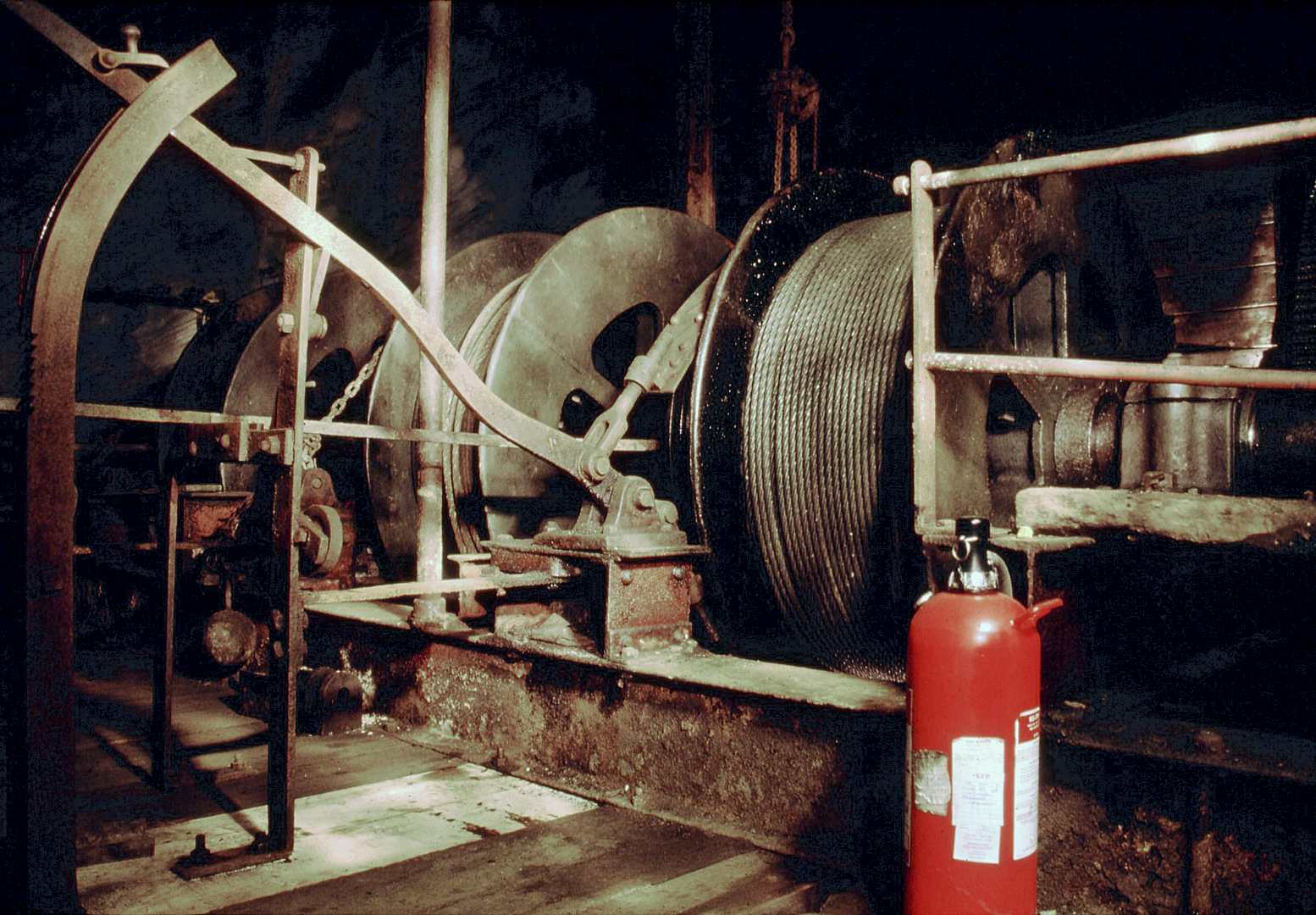



Large underground quarry linked with Oakeley. Used by Go Below for adventure trips.*
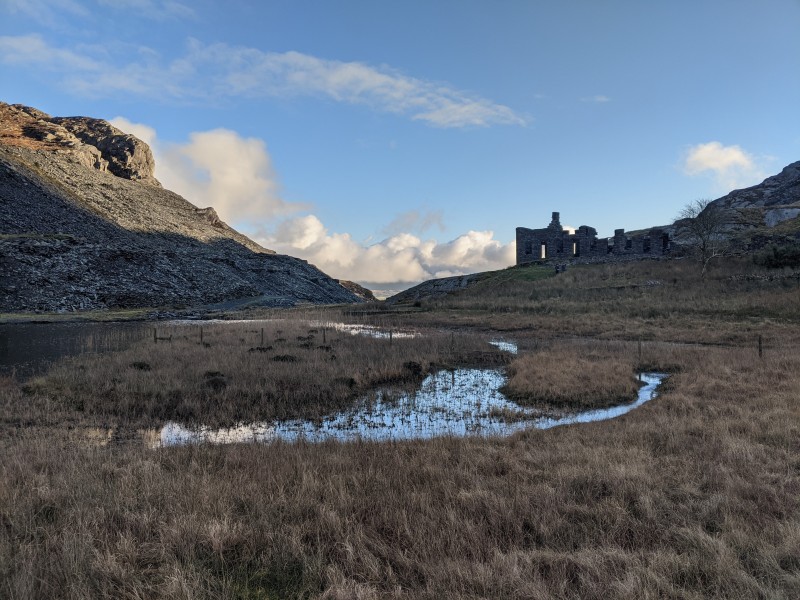
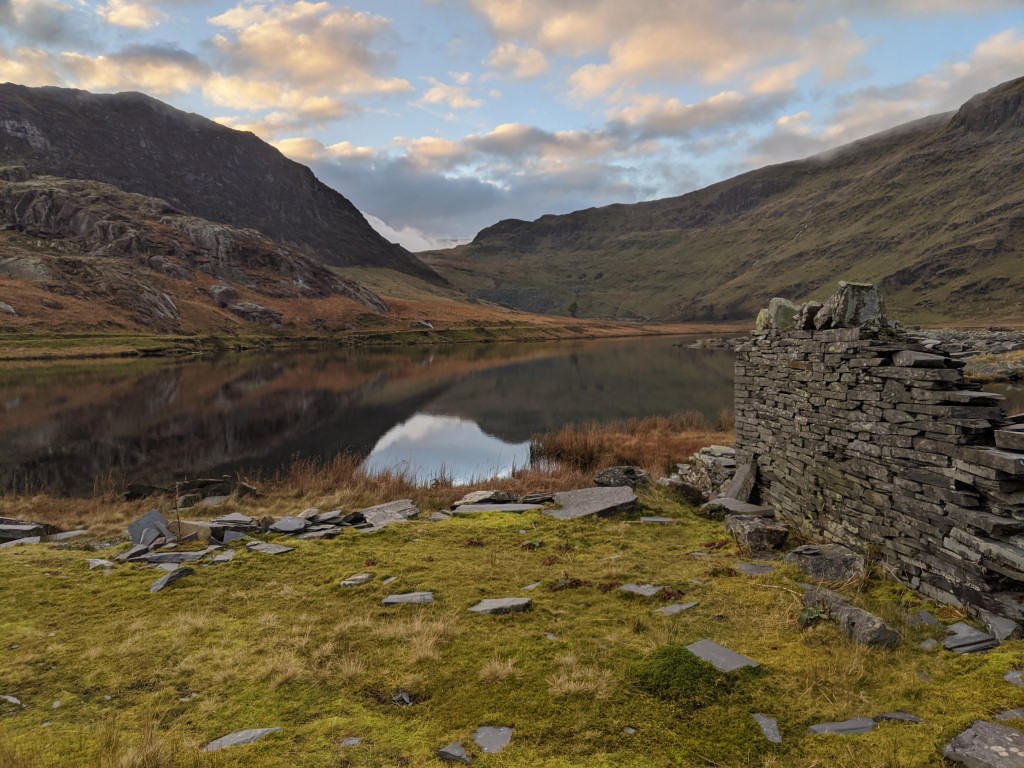
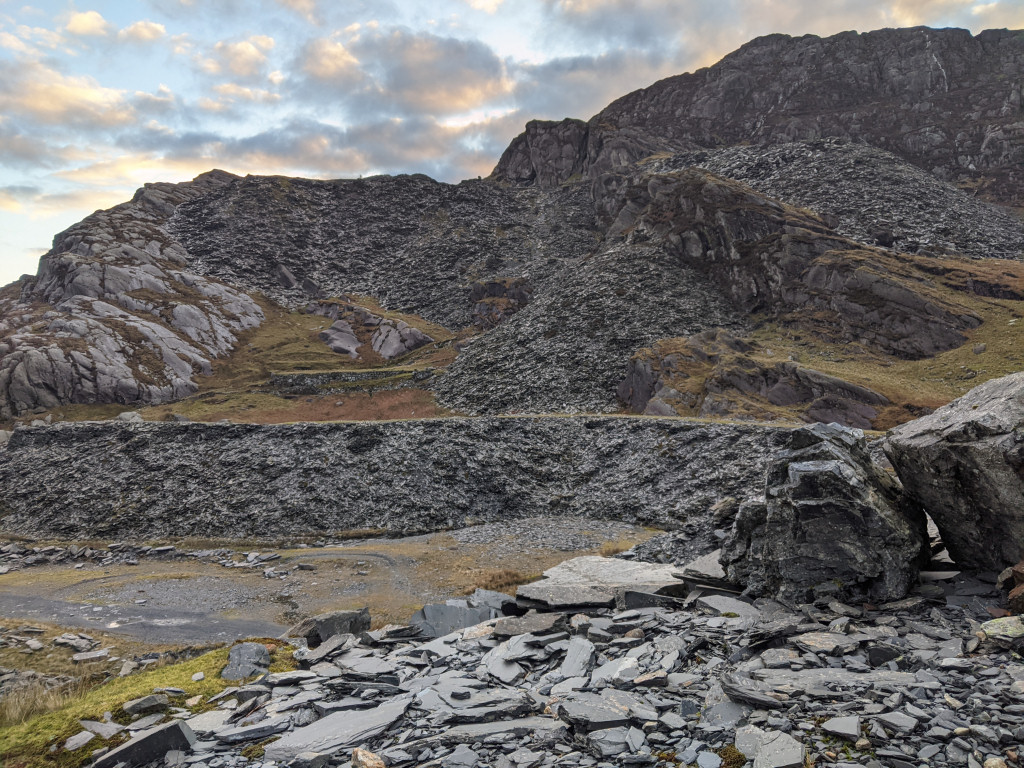
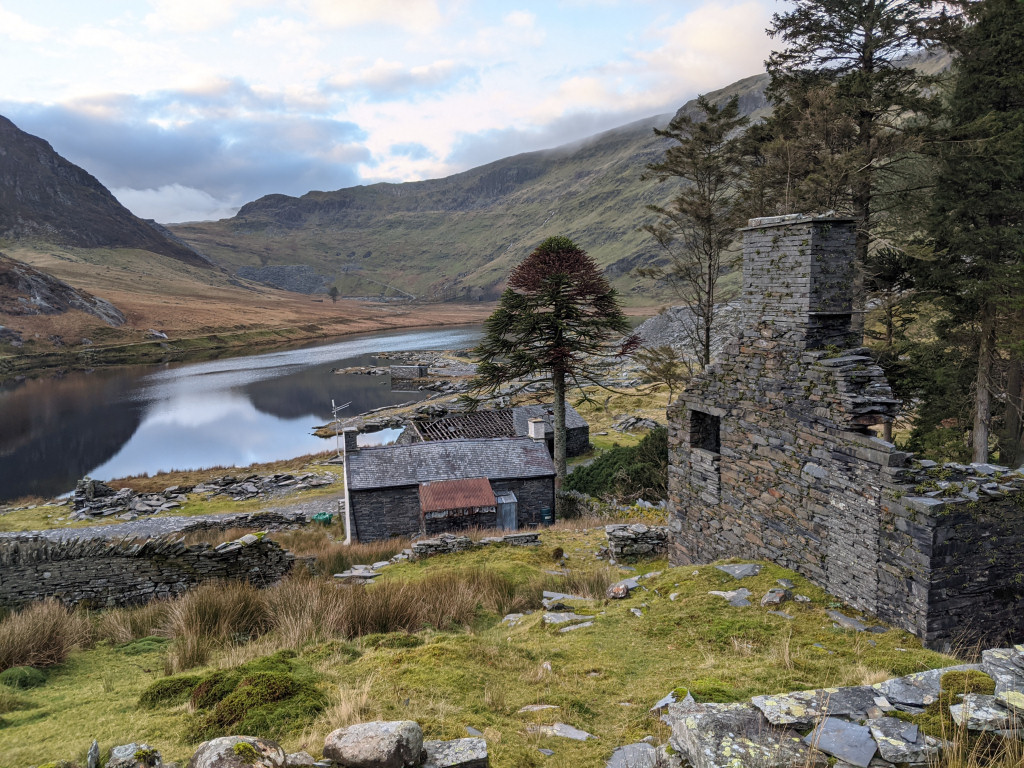
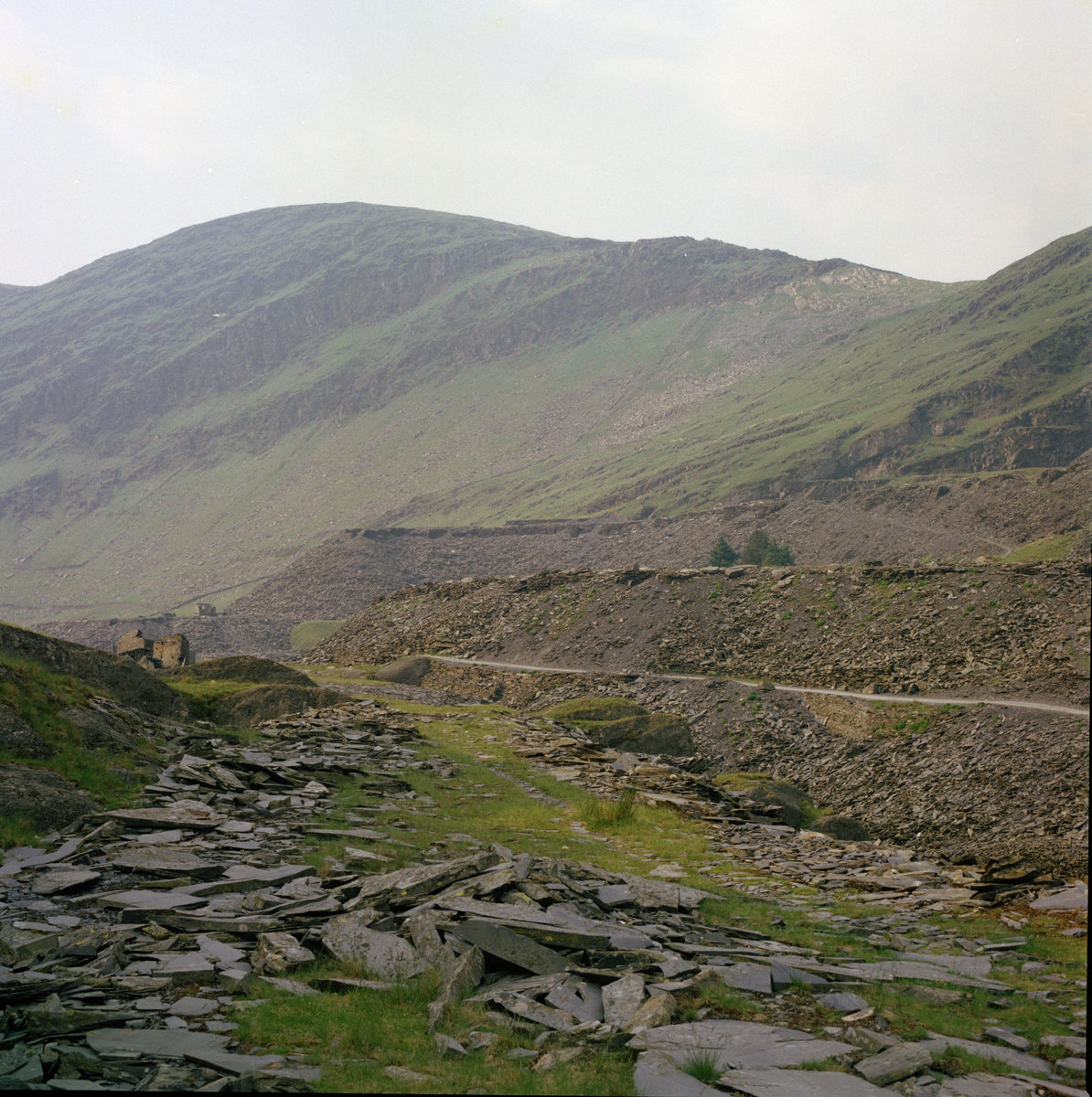
Much of Cwmorthin’s original surface features were lost to untopping, including the 1925 ‘Beau Geste Fort’ powder house. Near the lake, traces of the steam-powered Lake Mill remain, with parts of the slate-built terrace surviving though older structures are ruinous. The rapidly decaying Tiberias Chapel and the modern mill site on the Cross Mill location denote the quarry’s footprint. A Pelton wheel with generator survives alongside a holding pond, fed by well-preserved leat systems. The adjacent river was channelled for power at the original Dolwen station, and leats and subsidence from underground collapses are evident on the hill above. Cast iron boundary markers delineate Cwmorthin’s limits with Oakeley, while two tramway inclines, Tan y Murian and Village, featuring cuttings and embankments, remain prominent landscape features.
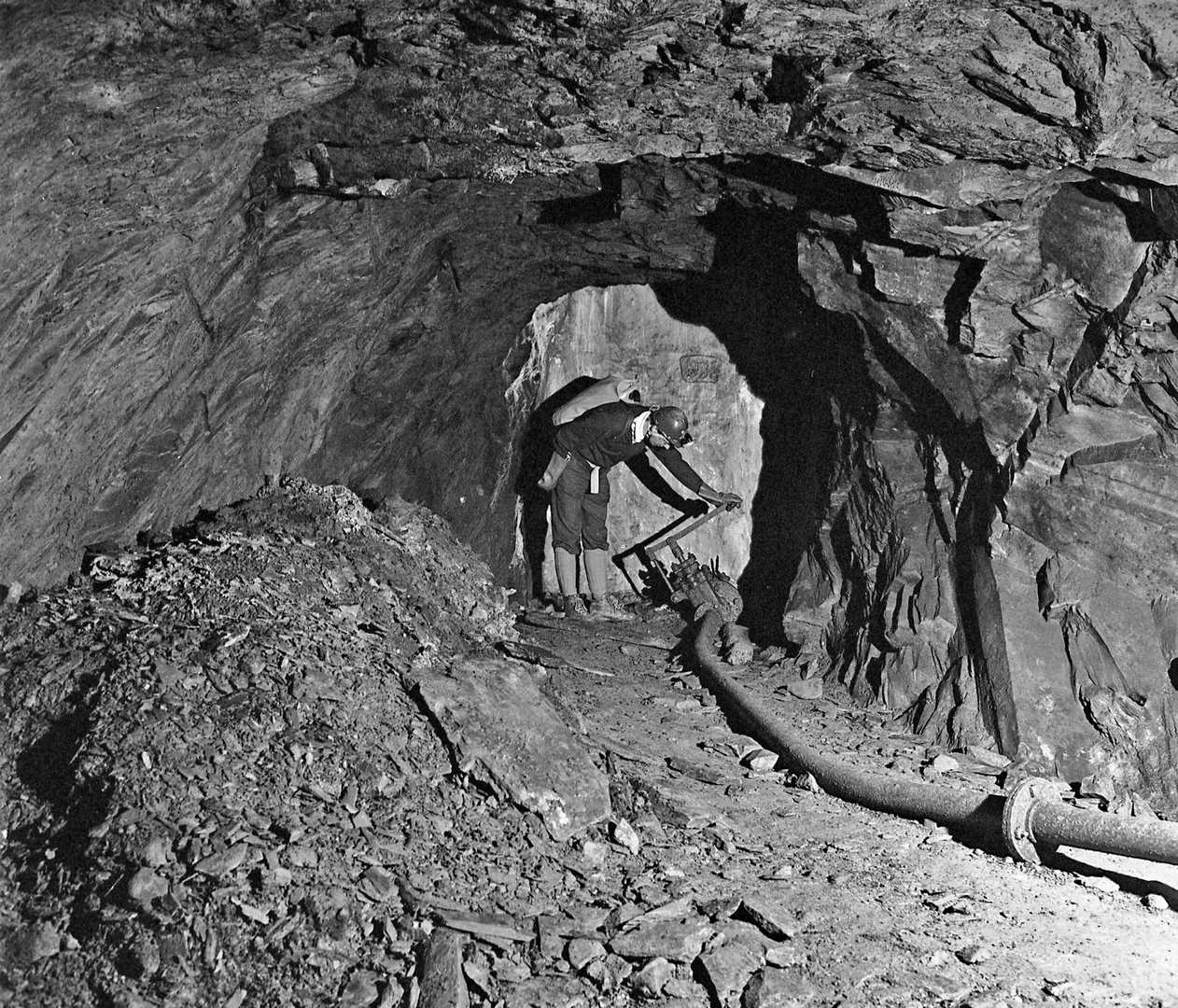
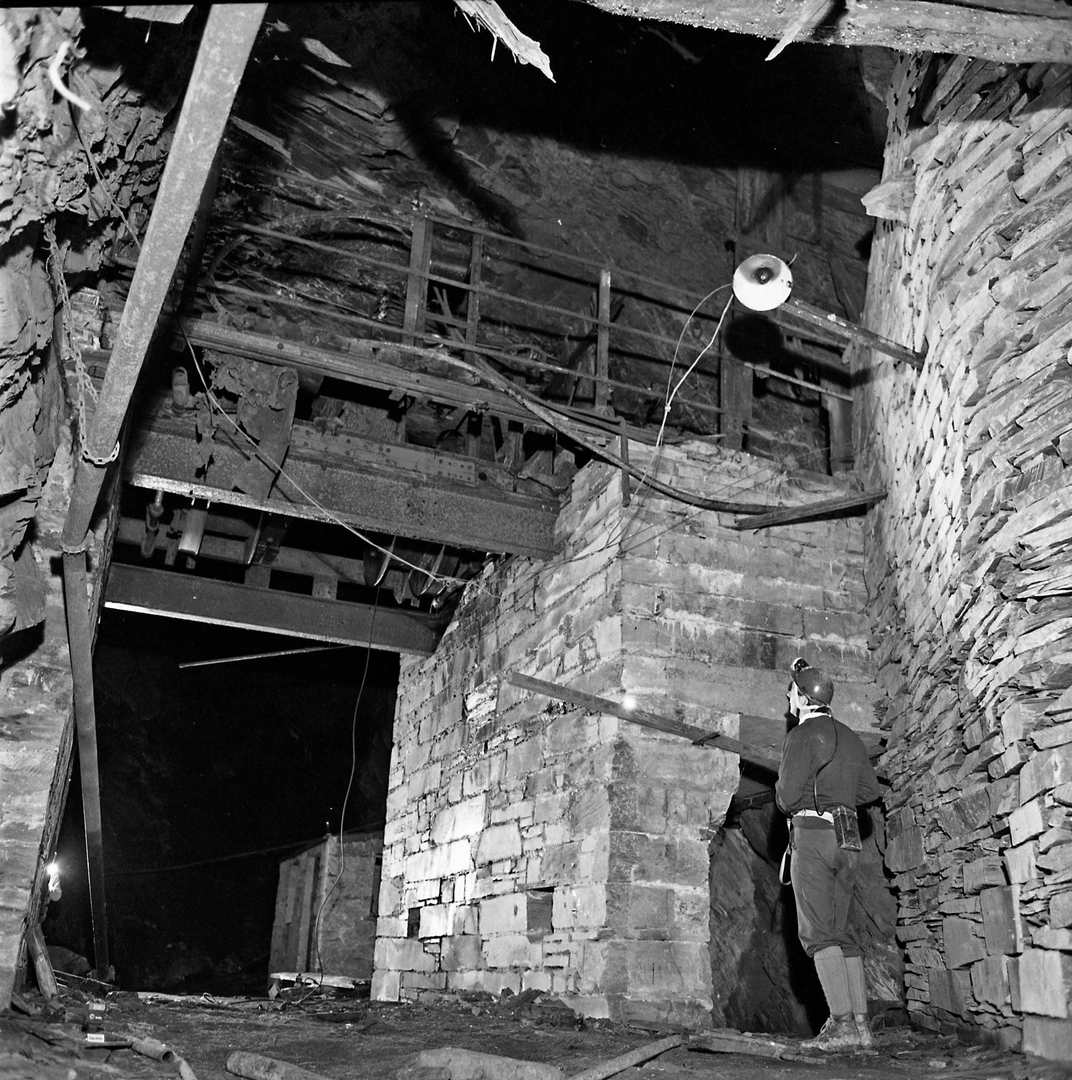
Cwmorthin was a large underground slate quarry known for its harsh working conditions, including the dangerous use of steam boilers underground without ventilation. Quarrying began in 1810 as an open pit, with sporadic activity until the early 1860s when a tramway connection to the Ffestiniog Railway spurred extensive underground development. Initially, chambers were worked above the water table, with slate transported through adits to mills at lake level. As the quarry deepened, steam and later electric power were employed for pumping and haulage. By 1882, Cwmorthin was a major operation with over 500 workers, producing 10,376 tons of slate annually across three mills equipped with about 50 saws and 50 dressers. A major collapse in 1884 severely reduced production, and in 1900 the quarry was incorporated into the Oakeley quarry, leading to the abandonment of surface works. Plans for open workings in 1925 never materialized, but intermittent activity continued into the 1930s and 1950s. Later operations were small-scale, with machinery placed underground to prevent vandalism. Extensive untopping occurred in the 1980s, and the quarry briefly revived alongside Croes y Ddwy Afon with a rebuilt mill.
External Links
Publications (27)
- (1884); Cwmorthin 1884 plan; 1 pages
- (1899); Cwmorthin 1899 plan; 1 pages
- (1981); WMS Newsletter Issue 04 Dec; 3 pages
- (1982); CATMHS - Newsletter 001; 27 pages
- (1982); WMS Newsletter Issue 07 Dec; 3 pages
- (1988); WMS Newsletter Issue 18 May; 12 pages
- (1990); WMS Newsletter Issue 22 Jun; 8 pages
- (1991); WMS Newsletter Issue 24 Jun; 4 pages
- (1993); CATMHS - Newsletter 035-July; 33 pages
- (1994); CATMHS - Newsletter 040-October; 31 pages
- (1995); CATMHS - Newsletter 041-January; 33 pages
- (2000); CATMHS - Newsletter 059-January; 43 pages
- (2000); CATMHS - Newsletter 060-June; 20 pages
- (2003); CATMHS - Newsletter 071-May; 29 pages
- (2005); CATMHS - Newsletter 079-May; 37 pages
- (2005); CATMHS - Newsletter 081-November; 29 pages
- (2018); CATMHS - Newsletter 131-May; 59 pages
- Gwyn, David, (2015); Welsh Slate: archaeology and history of an industry; Royal Commission on the Ancient and Historical Monuments of Wales; 9781871184518
- Isherwood, Graham (1995); Cwmorthin Slate Quarry
- Isherwood, Graham; Graham Isherwood Slate Collection - Oakley Cwmorthin Floor Heights; 1 pages
- Lindsay, Jean (1974); History of the North Wales Slate Industry; David & Charles; pp.316-317; ISBN 0-71536-264-X
- NMRS; Newsletter Nov/1983; pp. 2,5-6.
- NMRS; Newsletter Sep/1984; p. 8.
- Richards, Alun J. (2013); Slate Quarrying in Wales; Gwasg Carreg Gwalch; ISBN 1-84527-026-6
- Richards, Alun John (1991); Gazeteer of the Welsh Slate Industry, A; Gwasg Carreg Gwalch 978-0863811968
- Richards, Alun John, (1999); The Slate Regions of North and Mid Wales and their Railways; Gwasg Carreg Gwalch; 0863815732
- Richards, Alun John, (2002); Fragments of Mine & Mill in Wales; pp.33, 46, 118 ; Gwasg Carreg Gwalch; 0863818129