



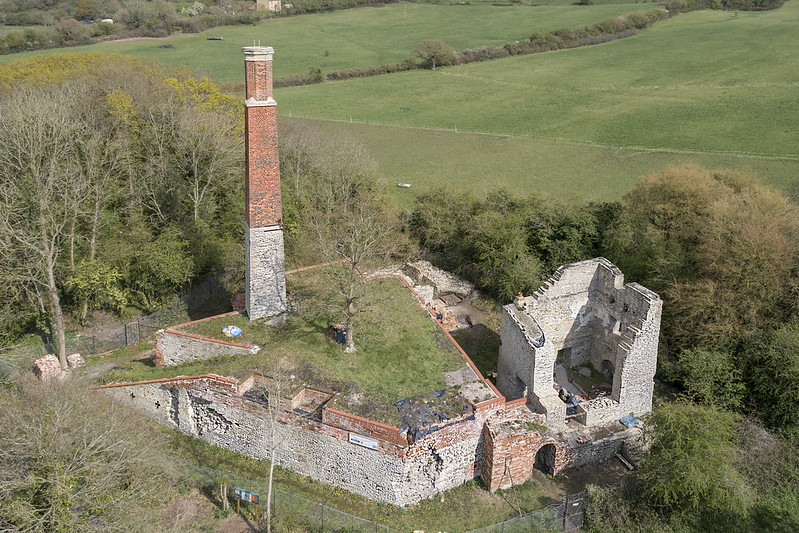
Brandy Bottom Colliery is a 19th-century steam-powered colliery situated in the parish of Pucklechurch on the South Gloucestershire coalfield. It stands along the former route of the Dramway, a horse-drawn railway used to transport coal from Coalpit Heath toward the River Avon near Keynsham or to Bristol—operational until around 1850.
Since 2007, the Avon Industrial Buildings Trust (AIBT), in collaboration with landowners Ibstock Brick and Historic England, has been steadily engaged in conservation work at Brandy Bottom Colliery. Efforts have included vegetation clearance, topographical and structural surveys, rectified photography, and careful building conservation. Grants from Historic England have supported targeted repairs to critical features such as the chimney, engine houses, heapstead, and flue structures.
1855-1870 Jeffries, Walters & Co.
| Aspect | Summary |
|---|---|
| Origins | Shaft first recorded c.1837; known as “Lord Radnor’s Pit.” |
| Name Usage | “Brandy Bottom” documented from 1856. |
| Development | Survey by Handel Cossham (1851); lease in 1871; southern shaft sunk in 1875; connected to Parkfield for hoisting, pumping, and ventilation. |
| Later Ownership | Cossham’s assets auctioned in 1900 to East Bristol Collieries Company. |
| End of Operations | Coal hoisting ceased before WWI; served ventilation/emergency exit; Parkfield closed in 1936. |
| Status | Derelict since 1936; designated Scheduled Ancient Monument in 2001. |
Public access is typically allowed only on days when work parties are in progress. These are scheduled and announced on the AIBT’s “Location and Work Parties” page. Visitor hours generally run from 10:30 am to 3:00 pm, though they may change with weather or ongoing work.
External Links
Publications (1)
- Matt Southway (1972); Bias (Bristol Ind Arch Society) Journal No 05 - Kingswood Coal – Part 2; 7 pages
