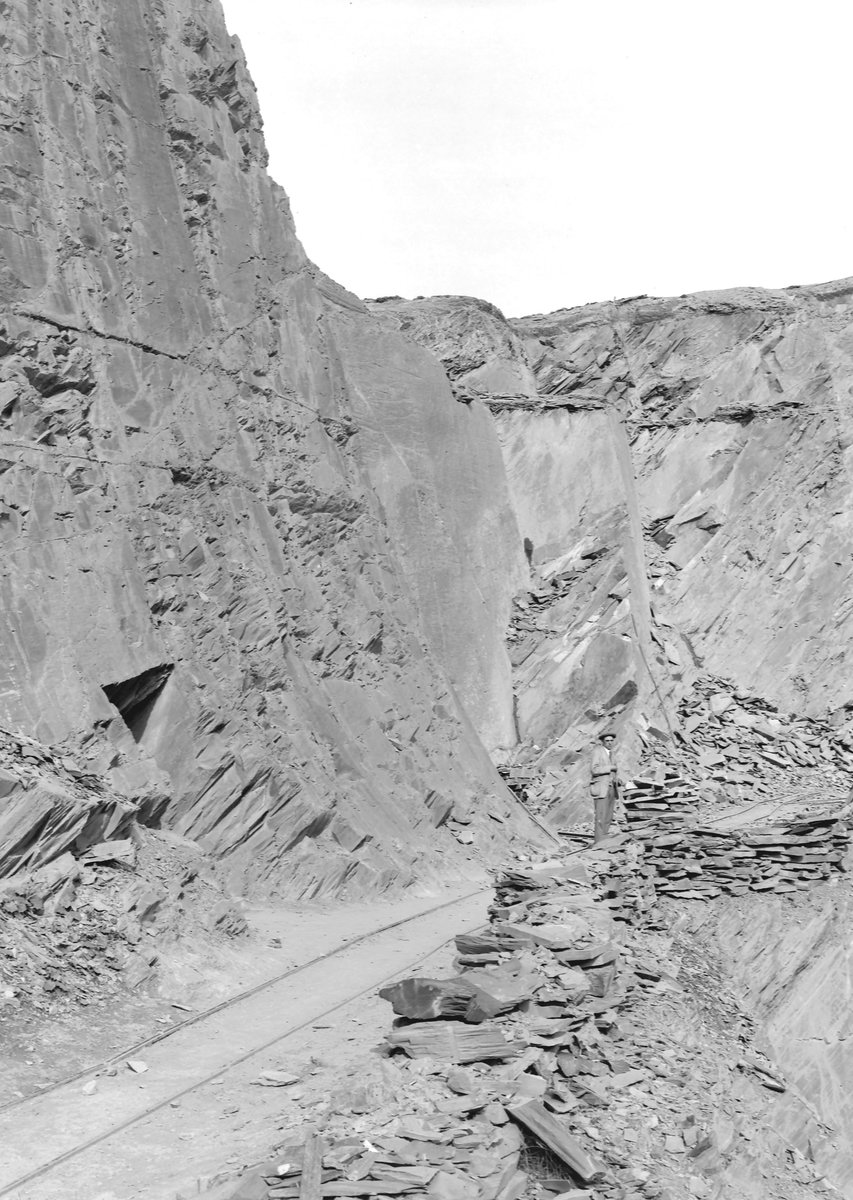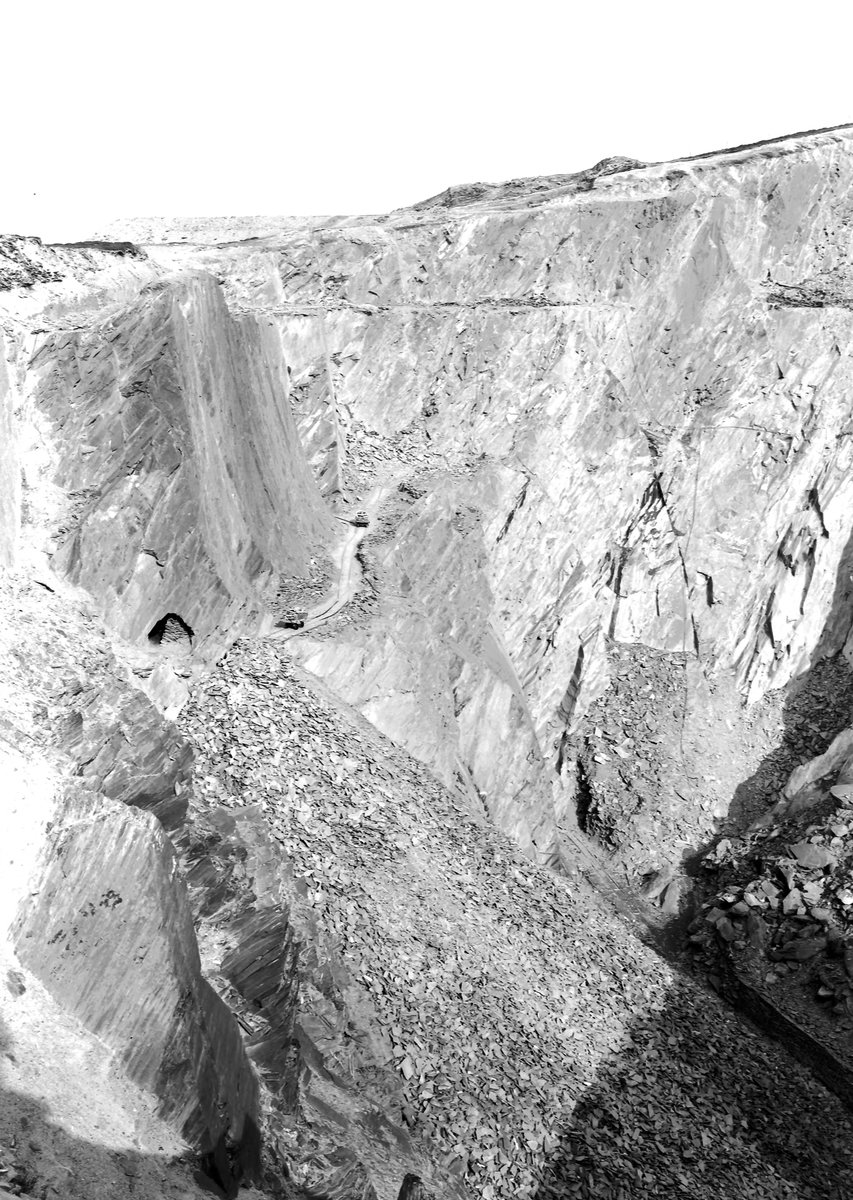



Three pits with adits.**
Additional workings scattered on the intervening slopes. In the easterly pit, traces survive of dressing sheds, high‑level hand‑working slab sheds, access cuttings and an incline with some slate sleepers still visible, while lower run‑in adits retain short lengths of rail and evidence of chambering despite rockfalls. The middle pit, partly water‑filled and approached by a cutting, preserves signs of a possible winding house for a former chain incline and a run‑in lower adit, whereas the western pit, also partly flooded, has the foundations of what was likely a steam winding house. The main processing area is now heavily disturbed, leaving only a freestanding smithy hearth and scattered foundations, but to the north the workers’ cottages at Tai Newyddion remain, and the line of the Oernant tramway can still be followed, with a number of slate sleepers surviving in situ.
Developed from early open and limited underground workings on east–west slate veins in the early 18th century and was substantially expanded in the 1820s with a focus on roofing slate. Later growth followed its 1857 connection to the Llangollen Canal via the Oernant tramway, and by the 1870s it employed about 160 men and produced roughly 5,000 tons of slate a year. Over time the original six or seven small diggings were amalgamated into three main pits, each reached by tunnels and incorporating some underground chambering, but the 1880s recession hit production hard, and after a long period of reduced working centred mainly on the eastern pit, the quarry finally closed in 1936.
Publications (1)
- Richards, Alun John (1991); Gazeteer of the Welsh Slate Industry, A; Gwasg Carreg Gwalch 978-0863811968