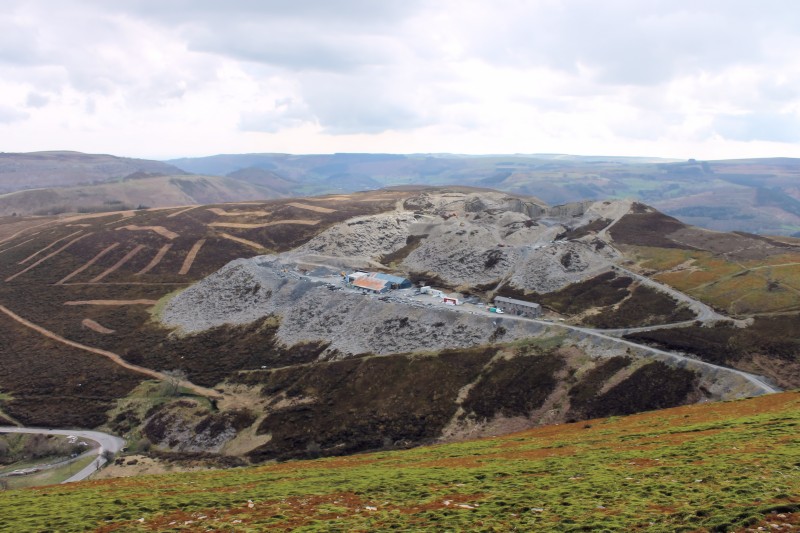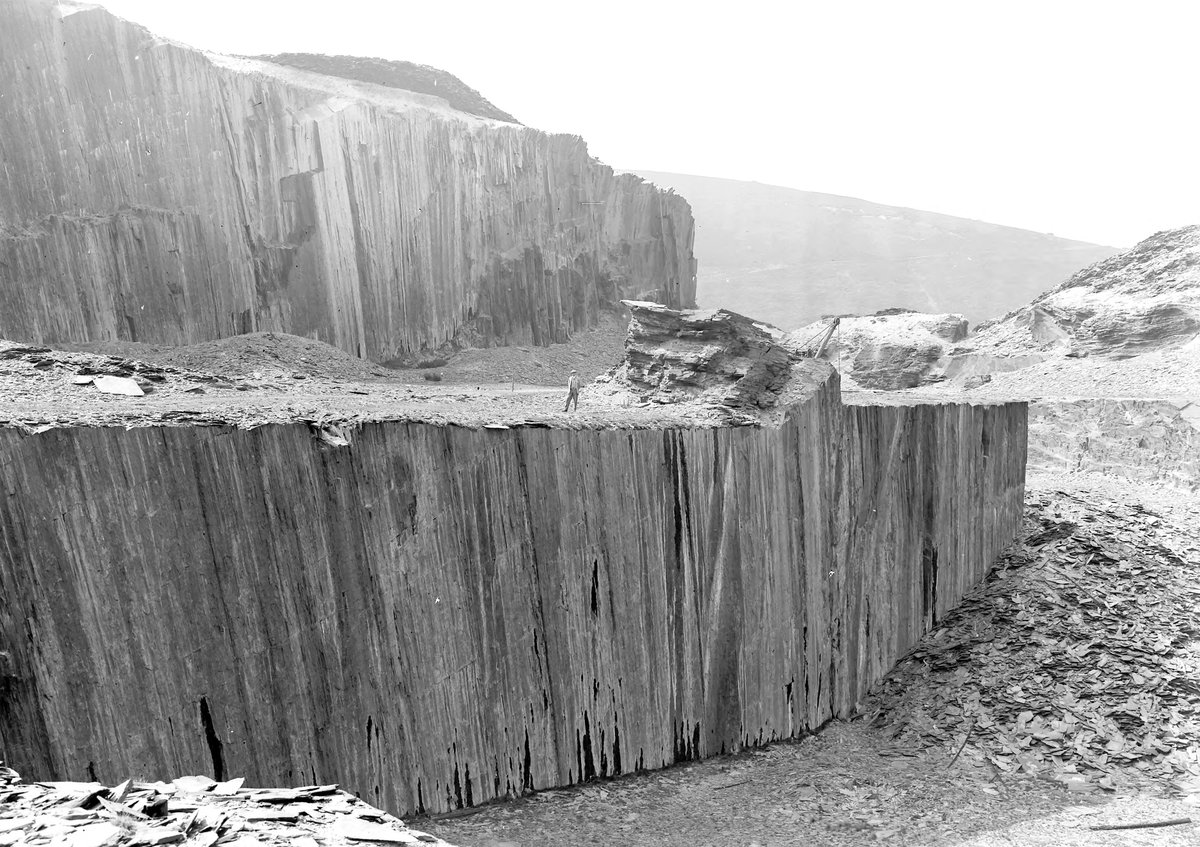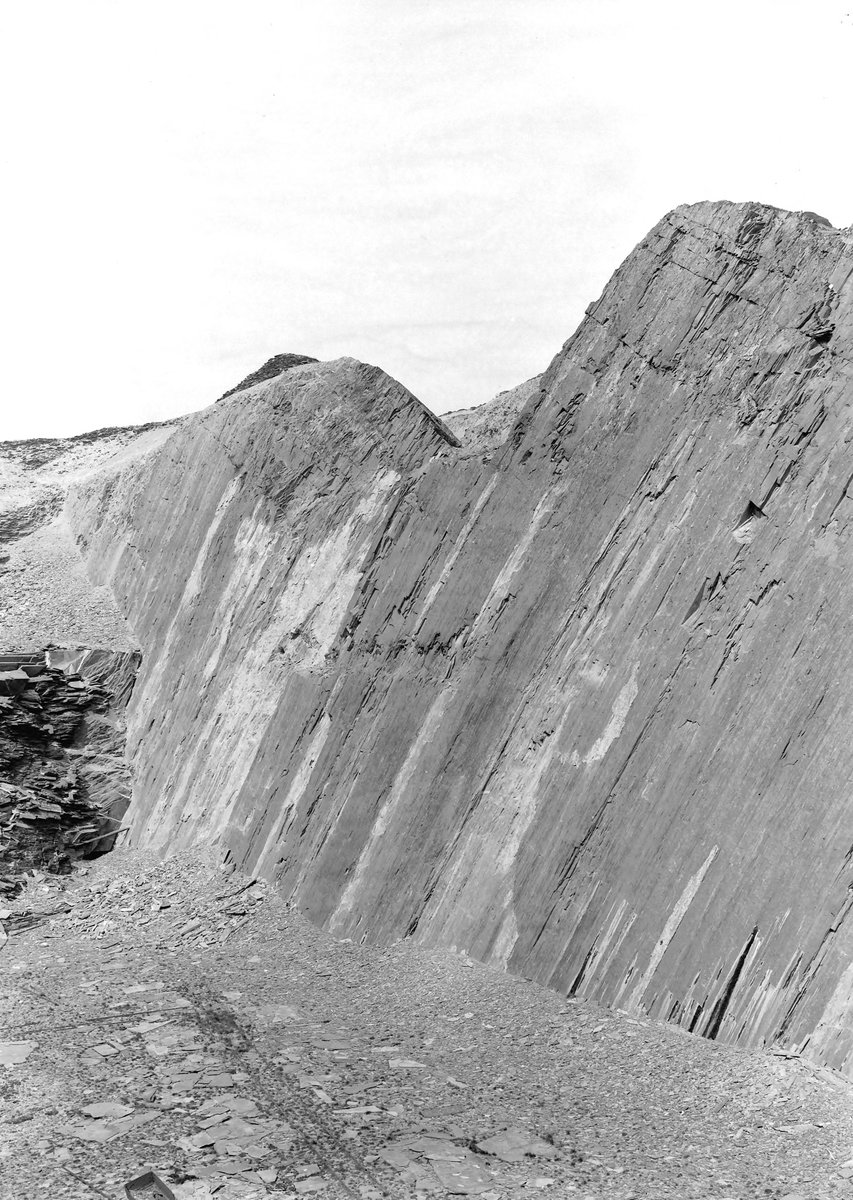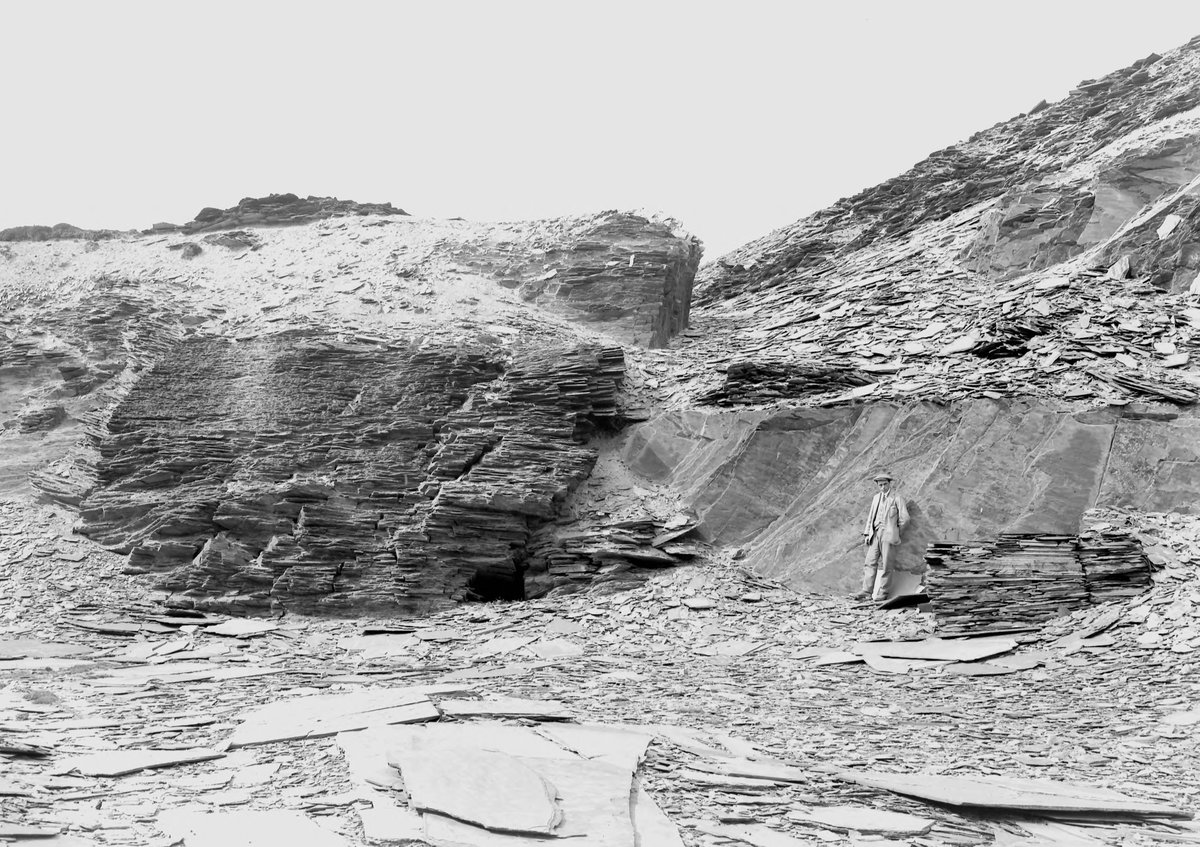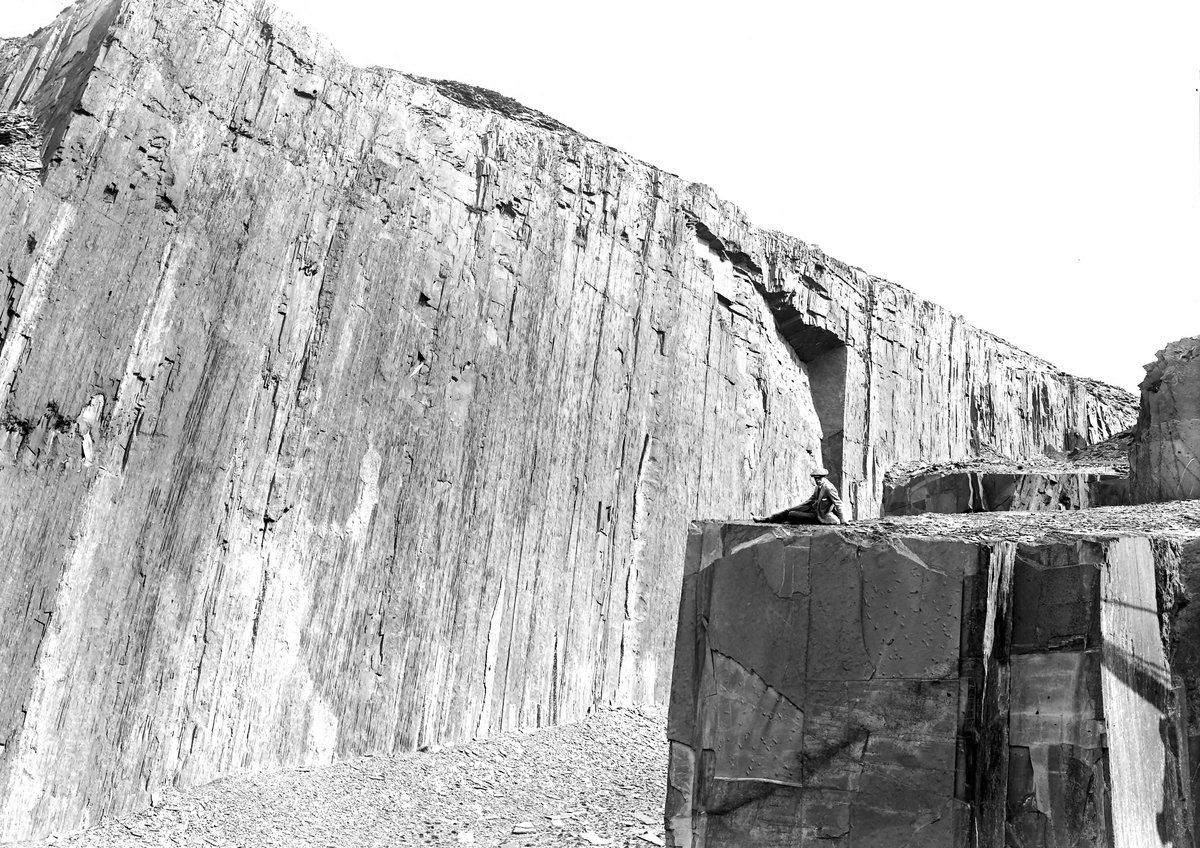



Working slab quarry.**
Quarry complex is divided into an upper site, the main pit, and the processing area:
Upper Site: This area contains the ruin of the earliest dressing shed, along with a forge and a walled stocking area.
Main Pit: This features a cutting that leads to an incline descending to the mill site. A cutting on the opposite side leads out to the rubbish tips.
Processing Area: The modern mill has been rebuilt on the original site and now houses diamond saws and polishers. The former office, smithy, and store buildings have been rebuilt and converted into a modern dwelling.
The formation of the Oernant tramway runs through the site and forms the present access road. The bed of the original exit incline survives in front of the mill, having been reused as part of the later tramway system. Mid-19th century trial excavations are also present nearby at grid reference SJ193461.
Opened in 1844, focusing on the production of very large slabs (up to 20’ x 10’). The Pentrefelin mill was constructed soon after the quarry began operations. Initially, slate blocks were carted via the Horseshoe Pass road and a short incline. Transportation of the finished product evolved: it was first sent by canal, then by the Oernant tramway from 1857, and finally by rail from 1865.
During the 1870s, the quarry employed up to 100 men. The on-site mill was equipped with four saws and two planers, all driven by steam power. Hand sawing continued at the site until approximately 1960. The quarry saw a decline in the 1890s, and though it had little work for decades, it reopened in 1934 utilizing diesel power. Activity gradually tapered in the mid-20th century before the site was later extensively modernised with new machinery for the production of very large slabs.
Publications (2)
- Richards, Alun John (1991); Gazeteer of the Welsh Slate Industry, A; Gwasg Carreg Gwalch 978-0863811968
- Williams, R.A.; NMRS (1985); British Mining 26 - Old Mines of the Llangynog District, The; ISBN 0901450 27 8; pp.119 Denb.?