


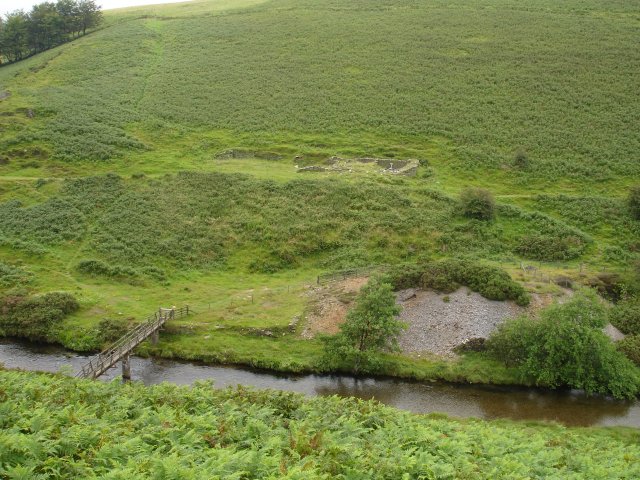
Operating from 1846 to 1854, initially as a copper mine and later as an iron mine, this site primarily extracted siderite at depth. On the southern side of the river lies the Wheel Pit, with the collapsed adit situated just west of the dump, and remnants of the miners’ offices located north of the dump. In May 2019, on the southern bank, a leat directed water to a waterwheel, extending about a quarter mile west to a point where it drew water from the river. Along the riverbank, running eastward, is a raised ditch resembling a tramway due to its level bottom and width; however, its trajectory from the wheel to the river suggests it was used for water discharge rather than transportation. The shaft, fenced off and flooded at river level, reveals a pump rod protruding about 8 to 10 feet above ground level. The dump on the eastern side comprises soft grey shale rich in secondary copper minerals, while the western tip consists mainly of harder rock coated with yellow limonite, yielding significant amounts of siderite and pyrite.
External Links
Publications (2)
- Cantrill T.C., Sherlock R.L. & Dewey H. (1919); BGS - Mineral Resources of GB (c1920s) Vol IX - Iron Ores - Durham, East Cumb., North Wales, Derbyshire, IOM, Bristol, Somerset, Devon & Cornwall; 96 pages
- Dines, Henry George (1956); BGS - Regional Memoirs - Metalliferous Mining Region of South West England Vol2, The; 335 pages
